Hiking GPS watch with offline maps, designed in Geneva
You choose the route.
It knows the way back.
Maps on your wrist when the phone signal drops. A way back when the weather turns. The same watch at the office on Monday. THEIA II shows you what you need and leaves the decisions to you.
Offline maps and multi-band GPS
When the signal goes
The maps live on the watch. No signal, no problem.
- 4 GB of offline maps, loaded from your computer
- Routes planned on OpenStreetMap, sent to the watch
- Dual-frequency GPS for a cleaner line in valleys and forest
How it works
The maps live on the watch, so navigation keeps working without a phone signal. Load offline maps from your computer into 4 GB of memory, plan a route on OpenStreetMap in the app and send it to the watch before you leave.
In a deep valley, in forest or below a rock wall, satellite signals bounce. The dual-frequency GPS receiver listens on two bands, which improves GPS accuracy and gives more accurate tracking: a cleaner line on your map, on the right side of the ridge. Standard GPS tracking uses one band; the second improves tracking accuracy where it counts.
Return to start and breadcrumb navigation
When the fog comes in
Hold one button for 4 seconds. The watch leads you back.
- 4-second press on the bottom button
- No phone signal needed
- Breadcrumb navigation along the line you walked
How it works
Fog, nightfall, a path that splits the wrong way. Hold the bottom button for 4 seconds and the watch leads you back along the line your GPS tracking recorded in GPS mode. Breadcrumb navigation logs your path, so you retrace steps you know before trying ones you don’t. The same GPS capabilities record distance and height gained for your sports tracking.
Barometric altimeter, barometer and compass
Height, weather, heading
Altitude, pressure and heading, one glance away.
- Altitude you set at a known point
- Pressure alert when the barometer falls fast
- Compass one swipe from the home screen
How it works
Calibrate the barometric altimeter at a known point, a hut or a summit sign, and your height is set for the day. Set a pressure-drop threshold and the watch tells you when pressure falls fast, a sign that weather is coming. The compass is one swipe from the home screen, so you don’t need a compass app on your phone, or even the ability to get a signal, to check your heading.
Three readings, precise data, one glance. The decisions stay yours.
Compass
Heading, one swipe away
The compass sits one swipe from the home screen. No phone, no signal needed.
A lightweight outdoor watch you can wear in town
Back down in town
58 g on your wrist, from the trailhead to the office.
- 58 g, a lightweight watch you forget you wear
- 1,000-nit AMOLED, readable in hard mountain light
- Replaceable glass, with a spare in the box
How it works
Rugged watches often look like tools. THEIA II is a lightweight watch at 58 g. Its 1.43-inch AMOLED touchscreen reaches 1,000 nits, a bright screen in hard mountain light, under replaceable W-Glass Secure with a spare in the box.
A silicone strap comes in the box, with leather as an option; there is no nylon strap in the range today. White-gold PVD (plated with white gold), black DLC or rose-gold PVD (plated with rose gold) give it the look of a premium watch. Between trips, the smart features take over: sleep tracking, heart rate, notifications and Strava for your sports tracking.
Tested in the Alps and at sea
Since 2022, Air’n has worked with the Compagnie des Guides de Chamonix Mont-Blanc and ENSA. Our guides and athletes test every watch in the high mountains and at sea.
- Compagnie des Guides de Chamonix Mont-BlancPartner since 2022
- ENSA ChamonixPartner since 2022
- Au Vieux CampeurStockist



Three finishes, seven faces
Make it yours
Absolute Black, White G or Rose G: choose the case that suits your days off the trail. The same instrument on the ridge and at the office, and the 22 mm strap changes in seconds.
Find the best GPS watch for how you go outside
Where are you heading?
There are many GPS watches. The best GPS watch for you depends on the trip: a day hike and three weeks on a glacier ask for different things. Pick the one closest to yours.
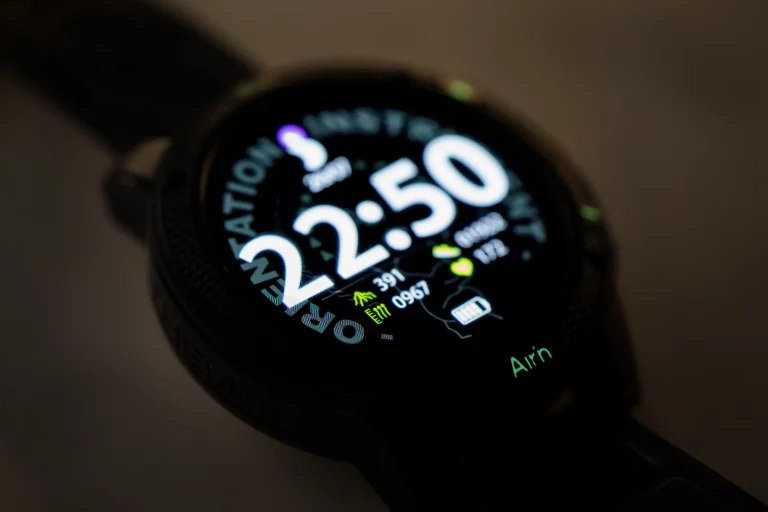
Beyond phone coverage
Day hikes and alpine routes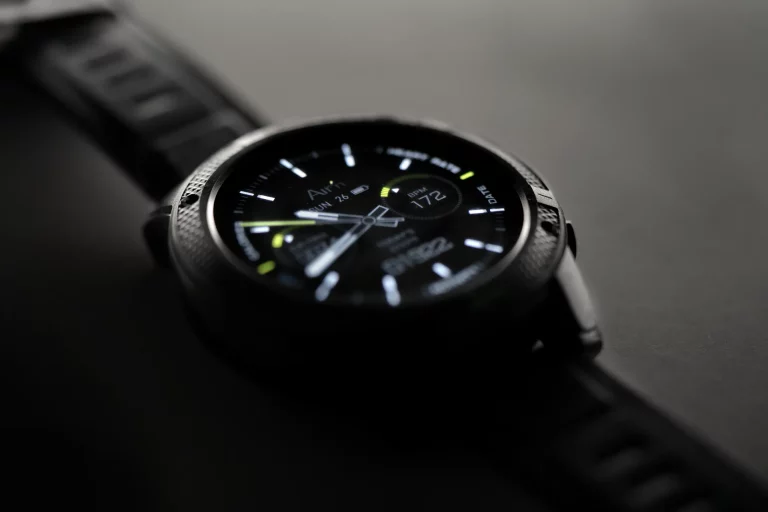
Ridges, tours and trails
Mountaineering, ski touring, riding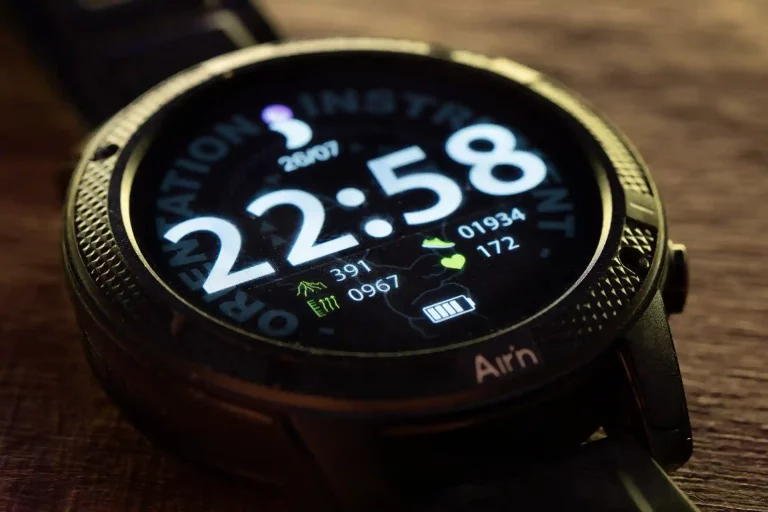
Trail on Saturday, office on Monday
One watch for both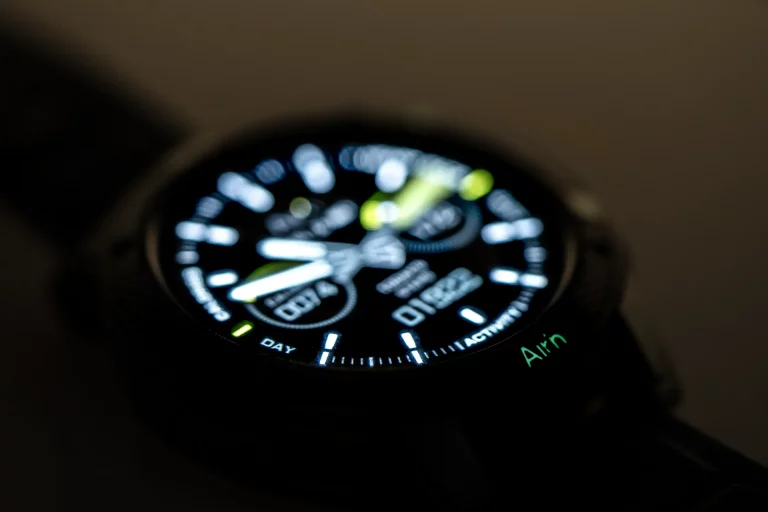
Weeks away from power
Expeditions and long traversesBeyond phone coverage
You need offline maps, GPS navigation and multi-band GPS on your wrist. This hiking watch is built for exactly that.
- Maps without a signal4 GB of offline maps on the watch
- A clean track in valleys and forestdual-frequency GPS
- A way backreturn to start with one 4-second press
Ridges, tours and trails
From a ski tour at first light to multi-day backpacking trips, see how the watch works in your sport.
- Altitude and weatheraltimeter and a pressure-drop alert
- Modes for your sportski touring, mountaineering, cycling, walking and running
- Glass that takes a knockreplaceable W-Glass, with a spare in the box
Trail on Saturday, office on Monday
58 g, an AMOLED watch face and three finishes, with smart features for the days in between.
- Light enough to forget58 g
- Readable everywhere1.43-inch AMOLED at 1,000 nits
- Smart featuressleep tracking, heart rate, notifications and Strava
Weeks away from power
Long battery life comes first. A solar or high-capacity outdoor watch will serve you better, and the comparison below shows which.
- BatteryTHEIA II is rated 20 days in normal use and 15 h in GPS mode
- Better choices herethe Garmin Enduro 3 or the Suunto Vertical 2, with far longer GPS battery life
THEIA II at a glance
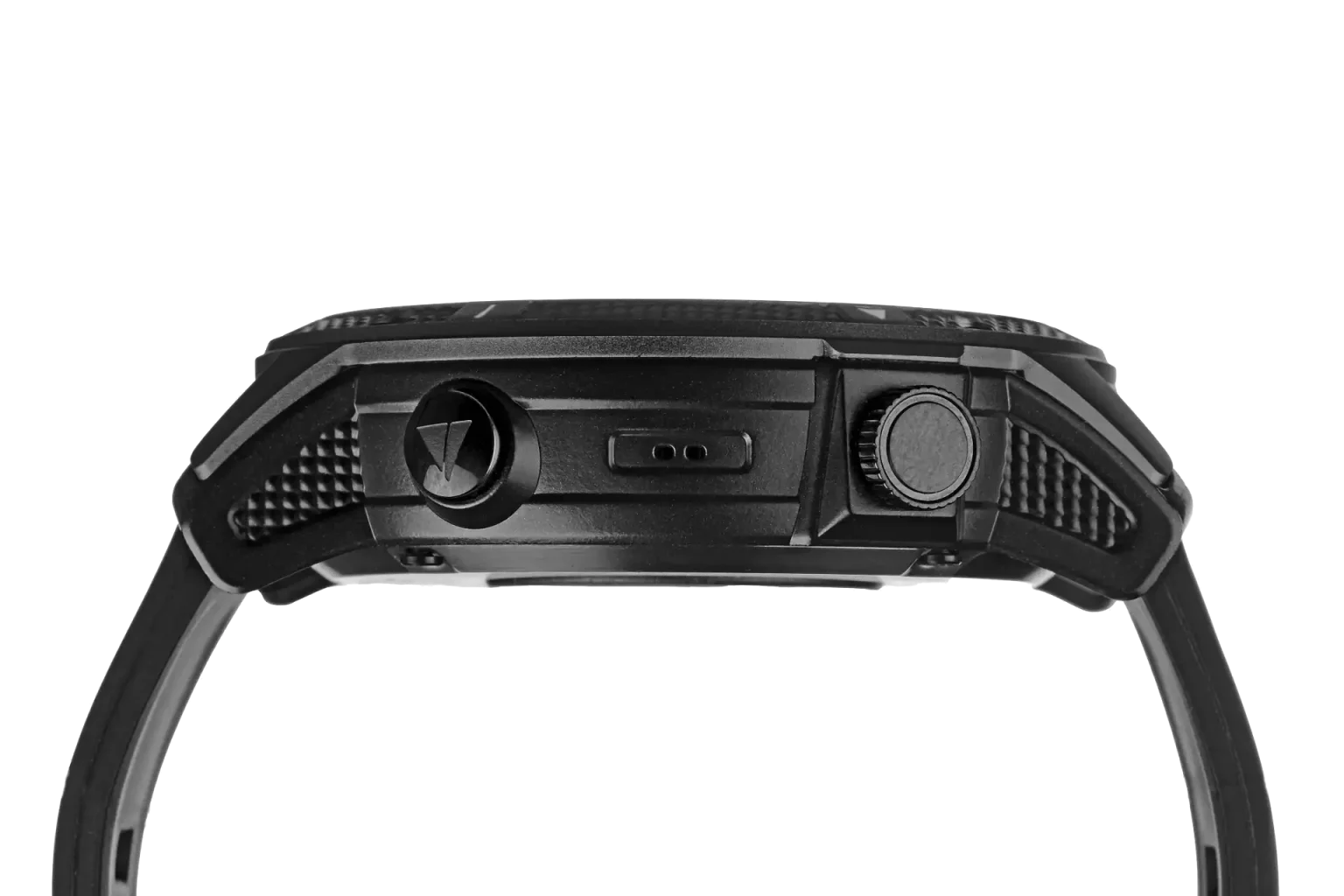
- Multi-band GPSTHEIA II is an outdoor watch with multi-band, dual-frequency GPS.
- Offline mapsIt stores offline maps in 4 GB of memory, so navigation works without a phone signal.
- Return to startA 4-second press on the bottom button starts return to start, a form of breadcrumb navigation.
- ABC sensorsIts ABC sensors are a barometric altimeter, a barometer and a compass, plus heart rate and pulse oximeter.
- 58 g, AMOLEDIt weighs 58 g and has a 1.43-inch AMOLED touchscreen at 1,000 nits.
- 10 ATM, spare glassIt is water resistant to 10 ATM and protected by replaceable W-Glass Secure, with a spare glass in the box.
- Designed in GenevaIt is designed in Geneva by Air’n Outdoor.
- Full specification
A GPS watch for your sport
By sport
Our buying guide sets THEIA II beside the best GPS watches for hiking, including where another outdoor watch suits you better. Read the buying guide
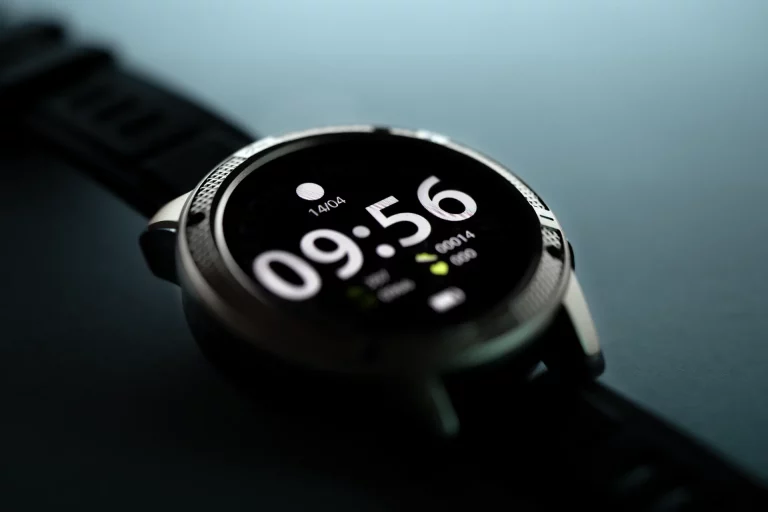
Mountaineering
Altitude, heading and a way back, tested with Chamonix guides.
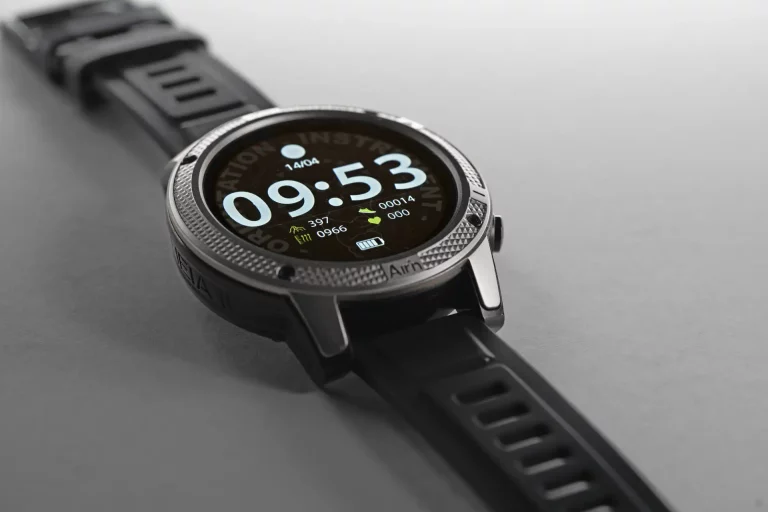
Ski touring
A dedicated ski touring mode for climbs and descents.
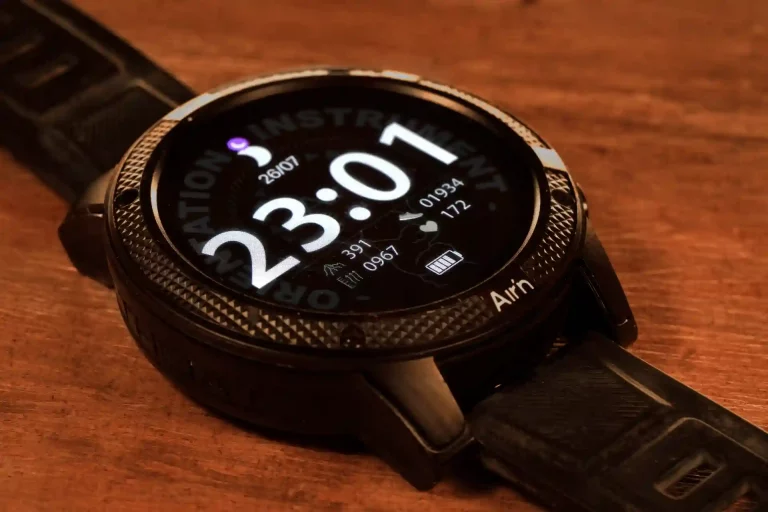
Mountain biking
Routes on the wrist, height gained and Strava sync.
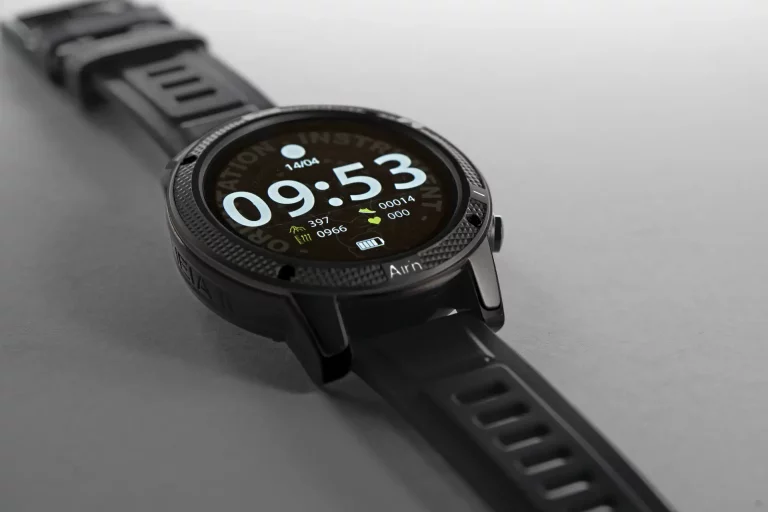
Climbing
Replaceable glass for rock that bites back.
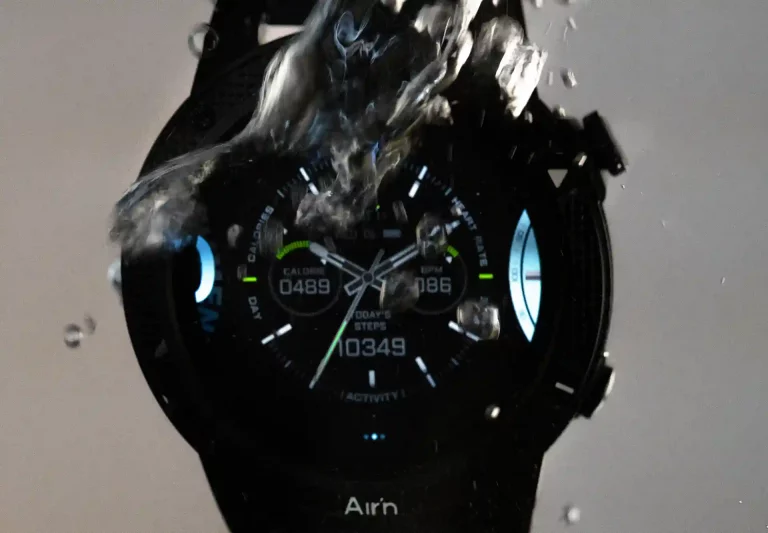
Sailing and water
10 ATM, speed in knots and a screen lock for spray.
Hiking watch guide: battery life, maps and GPS
Know what you are comparing
There are many GPS watches, and the best GPS watches for hiking are the ones that fit your trips. Here is how to read the numbers before you choose an outdoor watch, from our own THEIA II to other watches: the Garmin watches, COROS and Suunto watches and the Apple Watch.
Figures are each maker’s own, checked 12 October 2026.
Read the full buying guide01Battery life: how to read the numbers
Most watches quote several figures. Compare like with like.
Battery life is where GPS watches differ most. Most watches quote it in several modes, so compare the same mode across all the watches you look at. Standard GPS gives improved battery life over multi-band, dual-frequency GPS: the Garmin fēnix 8 AMOLED 47 mm is rated up to 47 h in GPS-only mode and up to 35 h in multi-band mode.
An always on display also costs power: the same Garmin fēnix drops to up to 37 h in GPS-only mode with the display always on. Battery saving modes stretch the numbers further, trading precise data for long lasting battery life.
Treat every battery life figure as a best case. Cold, screen brightness and settings all shorten real battery life on the trail, so plan multi-day battery life with a margin.
02Best battery life: Garmin Enduro 3, Suunto Vertical 2 and COROS VERTIX 2S
For multi-week trips far from power.
If you need multi-week battery life or multi-day battery life far from power, look at expedition watches. Solar charging gives the Garmin Enduro 3 extended battery life: up to 320 h in GPS mode with solar charging, according to Garmin in 50,000 lux conditions, and up to 120 h in multi-band mode. That is impressive battery life, the best battery life of the watches here, and the Garmin Enduro 3 adds sapphire crystal and a built-in flashlight.
The Suunto Vertical 2 reaches up to 250 h in Tour mode, at lower GPS accuracy, and up to 65 h in multi-band mode, with a built-in flashlight of its own. The COROS VERTIX 2S, rated 118 h in GPS mode, offers excellent battery life and a sapphire crystal screen.
03Garmin Instinct, Garmin fēnix and other Garmin watches
The widest range of outdoor watch options.
Garmin watches cover most of the outdoor watch market. The Garmin Instinct 3 AMOLED 50 mm is rated up to 24 days in smartwatch mode, up to 40 h in GPS mode and up to 30 h in multi-band mode. The Garmin fēnix 8 AMOLED 47 mm is rated up to 16 days in smartwatch mode. The Garmin Enduro 3 sits above both for battery life, and the Garmin Instinct remains the lighter, simpler choice.
04Apple users: Apple Watch Ultra
Phone ecosystem first, shorter workouts.
The Apple Watch Ultra is the outdoor Apple Watch. Apple users who want their iPhone ecosystem first may prefer the Apple Watch Ultra over other GPS watches. Apple rates the Apple Watch Ultra 4 at up to 50 h in normal use and up to 18 h of workout tracking, shorter than the expedition GPS watches above. For Apple users who hike a day at a time, the Apple Watch Ultra can be enough; for longer trips, check the battery life first.
05Maps: topo maps, detailed maps and maps preloaded
Check what is on the watch before you leave.
Some watches come with maps preloaded: the Garmin Enduro 3 ships with preloaded TopoActive topo maps, and Suunto offers free offline maps. On others, you load topo maps yourself. With maps preloaded you can leave straight away; without them, load your topo maps at home. THEIA II stores offline maps in 4 GB of memory, loaded from your computer.
If you need detailed maps with contour lines or advanced mapping on the wrist, check the topo maps each maker offers for your region before you buy a hiking watch.
06GPS accuracy and dual-frequency GPS
Why two bands matter in valleys and forest.
Dual-frequency GPS listens on two signal bands. In deep valleys, forest and below rock walls, a dual-frequency receiver gives a cleaner track than a single band. THEIA II, the Garmin Instinct 3, the Garmin fēnix 8, the Garmin Enduro 3 and the Suunto Vertical 2 all offer dual-frequency or multi-band GPS. Using dual-frequency GPS costs battery life, so most watches let you switch it off.
07Other things to weigh
Music, training history, running and price.
Music: if you want music storage on your wrist, check each model.
Training history: THEIA II works with its own app and Strava. If your history lives in the Polar Flow app, check how you would move it first.
Running: trail runners who chase pace and training load will be better served by a running watch.
Price: THEIA II starts at CHF 369. If you want an affordable watch for occasional walks, a simpler hiking watch without maps may be enough.
08Where THEIA II fits: day hikes, tours and everyday wear
Offline maps, multi-band GPS, 58 g.
THEIA II is a hiking watch for day hikes, ski tours and everyday wear: offline maps, dual-frequency GPS, return to start and ABC sensors in a 58 g outdoor watch with replaceable glass. If your trips last weeks away from power, one of the expedition GPS watches above, or other watches with solar charging, will serve you better.
Sources: Garmin Instinct 3 manual · Garmin fēnix 8 manual · Garmin Enduro 3 · COROS VERTIX 2S · Suunto Vertical 2 · Apple Watch battery
Warranty, delivery and support
Covered after you buy
- 2 yearsWarrantyOn the watch from activation. Accessories 2 years, straps 180 days.
- 24–48 hDispatchSent by Swiss Post, with transport insurance.
- 1 spareReplaceable glassW-Glass you fit yourself, a spare in the box.
- iOS + AndroidAppPlan routes, load maps, sync to Strava.
Questions about THEIA II
Before you decide
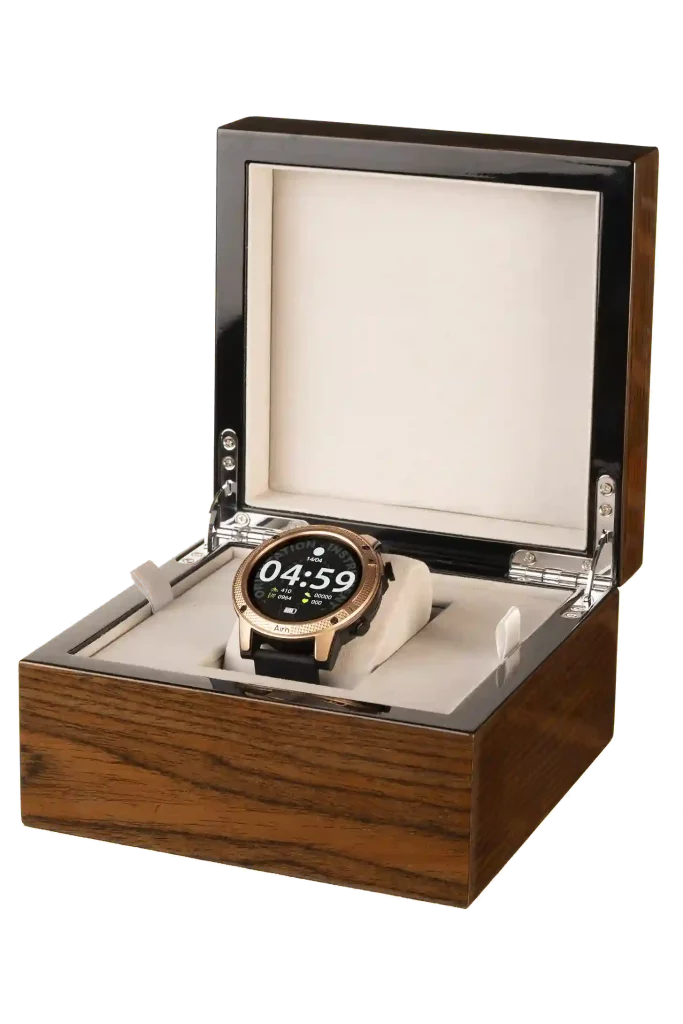
THEIA II is made for outdoor enthusiasts: a hiking watch that sits with the rest of your outdoor gear and stays on your wrist back in town.
From CHF 369, VAT included
Who is THEIA II for?
Hikers, mountaineers, ski tourers, riders and sailors who want offline maps, multi-band GPS and return to start in a 58 g outdoor watch they also wear in town. If you need weeks of GPS tracking far from power, a solar expedition watch will suit you better.
Does it work without a phone signal?
Yes. In GPS mode, GPS tracking, offline maps, return to start, the altimeter and the compass all work on the watch alone.
How does SOS work?
Hold the bottom button for 10 seconds and the watch asks your paired phone to call your emergency contact. It needs your phone and a network. For iPhone users, Apple’s rules may require you to confirm the call. SOS and its limits
How accurate is the GPS?
For a hiking watch, GPS accuracy matters most in steep terrain. Multi-band GPS improves GPS accuracy and location accuracy where single-band receivers struggle. In GPS mode, tracking accuracy is best with a clear view of the sky, and the watch warns you if the GPS signal drops, so you know when to trust your GPS tracking. THEIA II uses dual-frequency, multi-band GPS for reliable data and better tracking accuracy where it counts.
How long does the battery last?
Our shop lists 20 days in normal use and 15 hours in GPS mode. A full charge takes about 2 hours by USB-A or USB-C cable. If you need long battery life for weeks of GPS tracking, a solar outdoor watch will suit you better.
Does it work with third-party apps?
It works with Strava, so your sports tracking lands where you already keep it. Other third-party apps are not listed by us today.
Is it a running watch?
It has a running mode. Trail runners who chase pace and training load will be better served by a running watch; we designed THEIA II for the mountains and the water, where navigation and GPS accuracy matter more than pace.
Where is THEIA II designed?
In Geneva, by Air’n Outdoor, and tested with mountain guides in Chamonix.