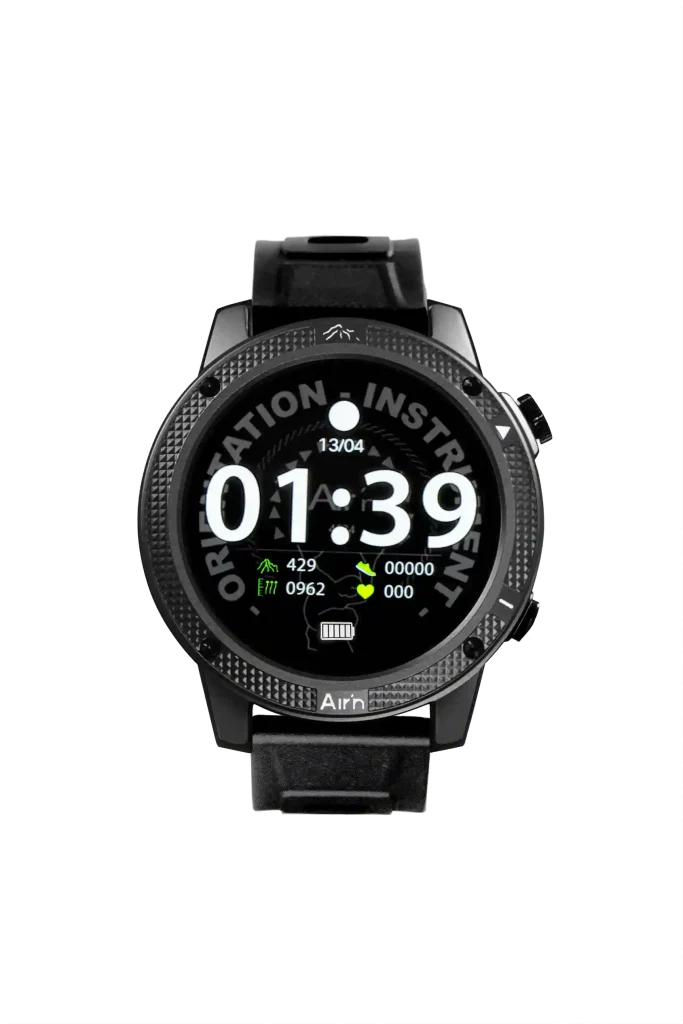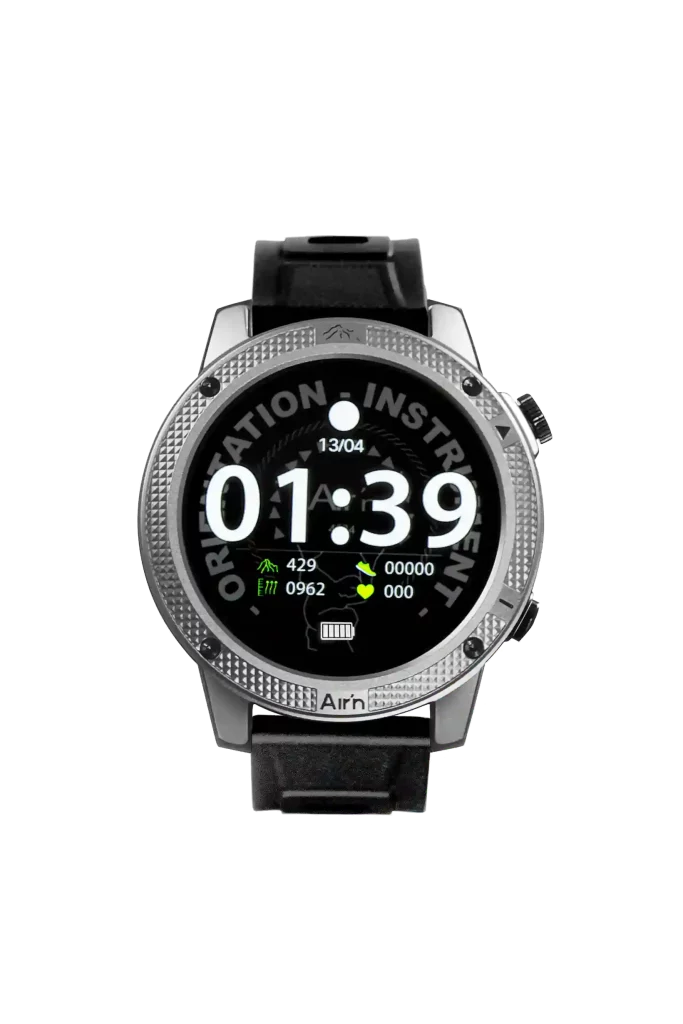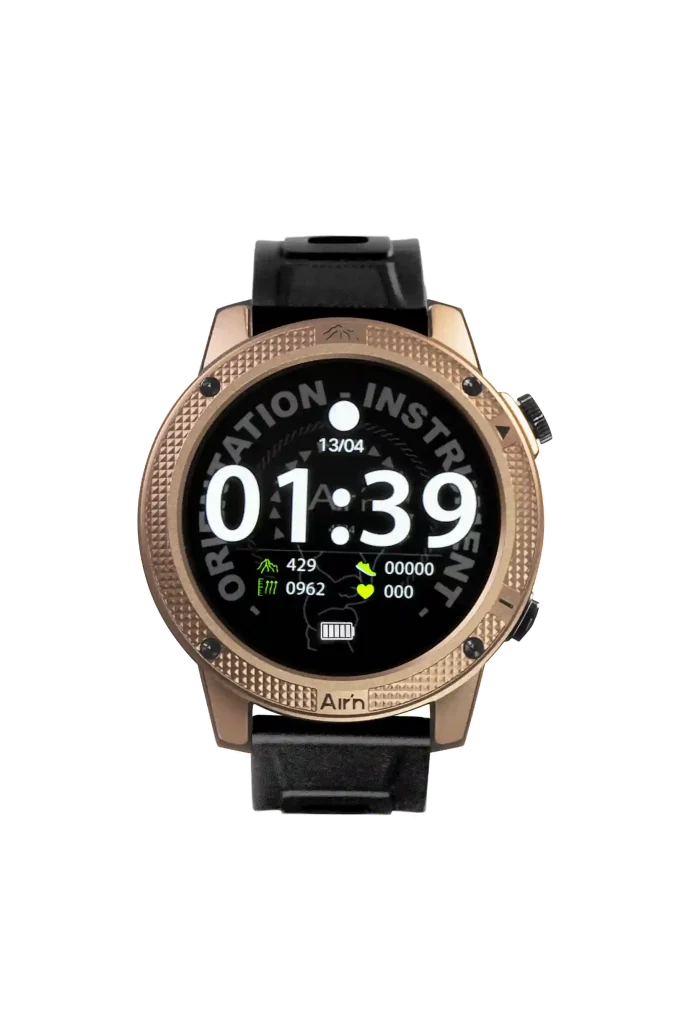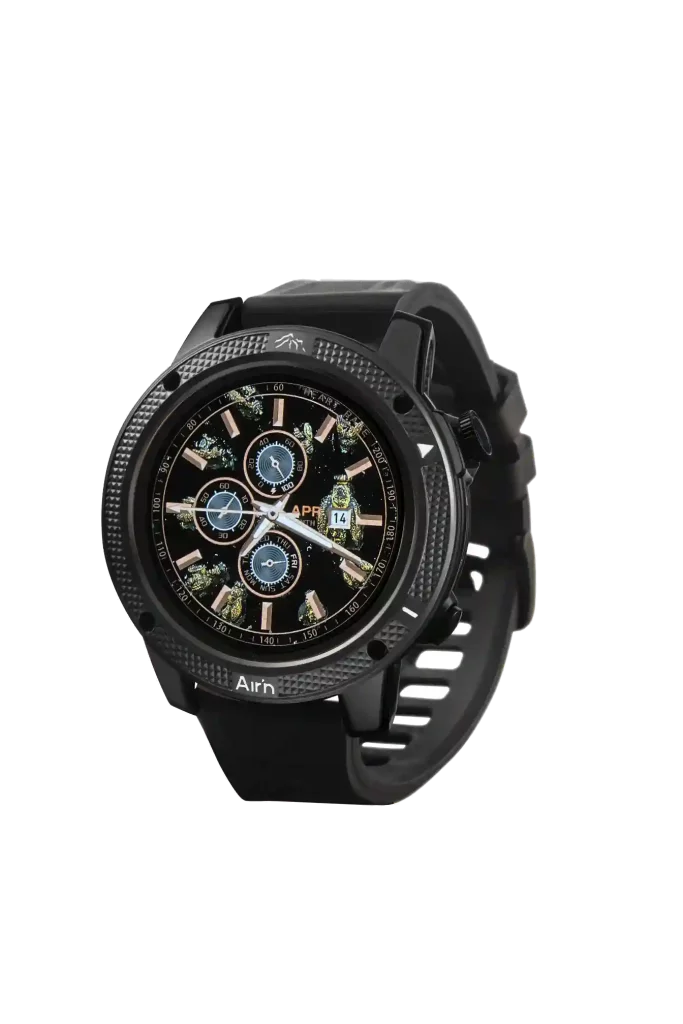
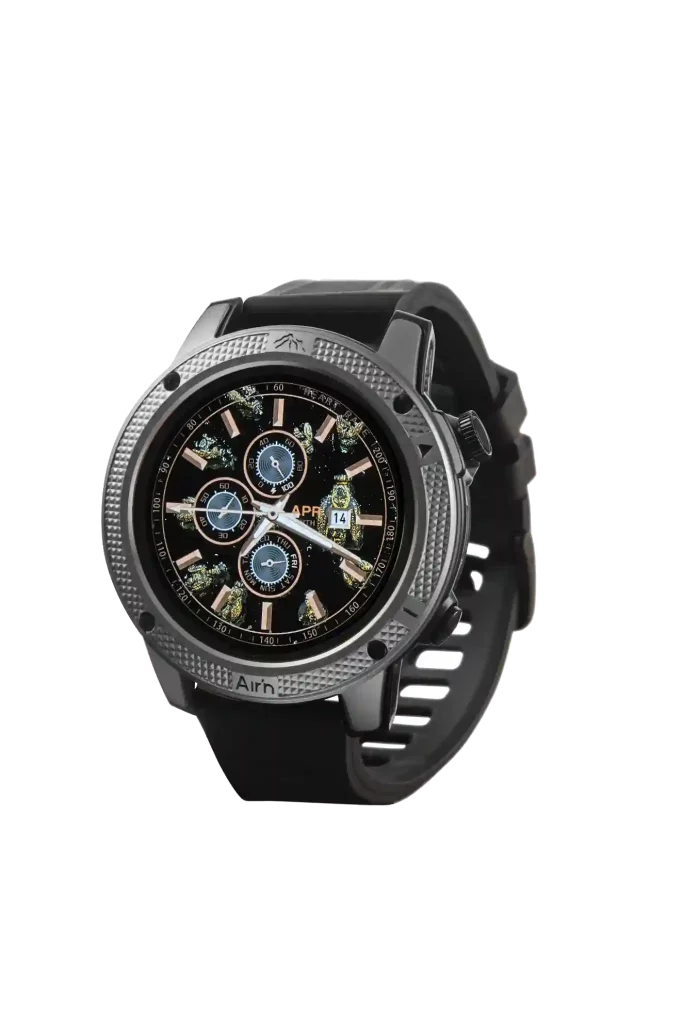
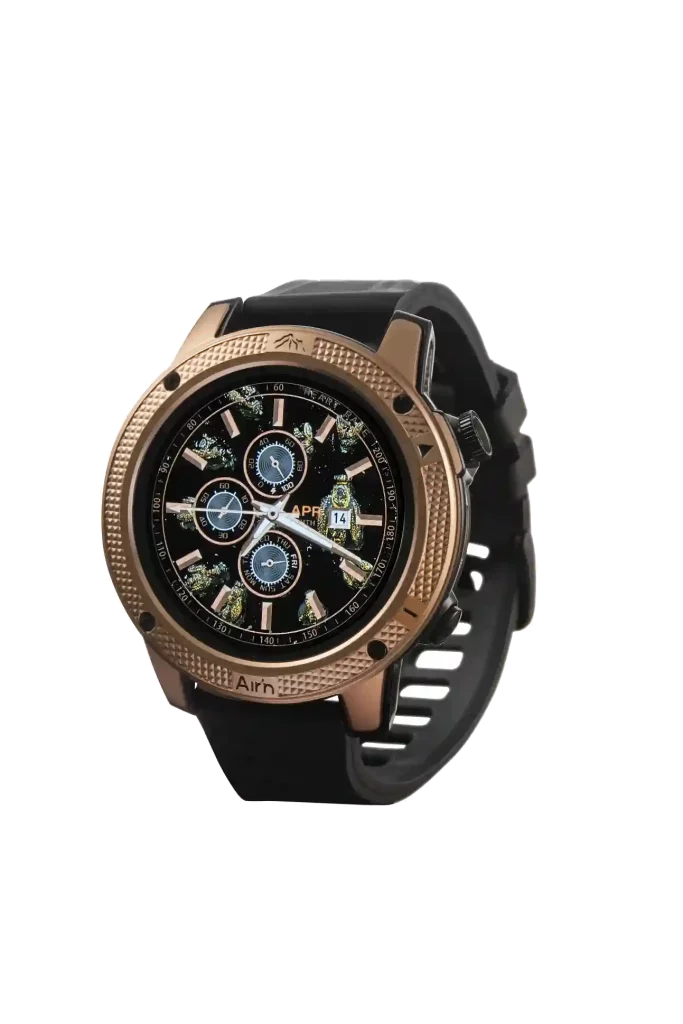
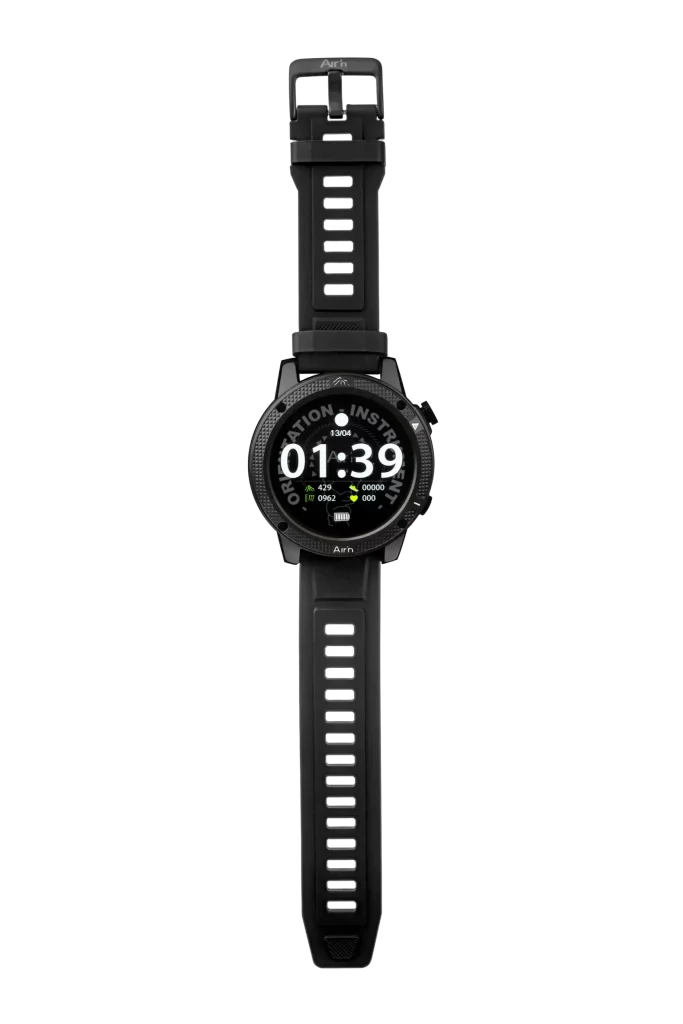
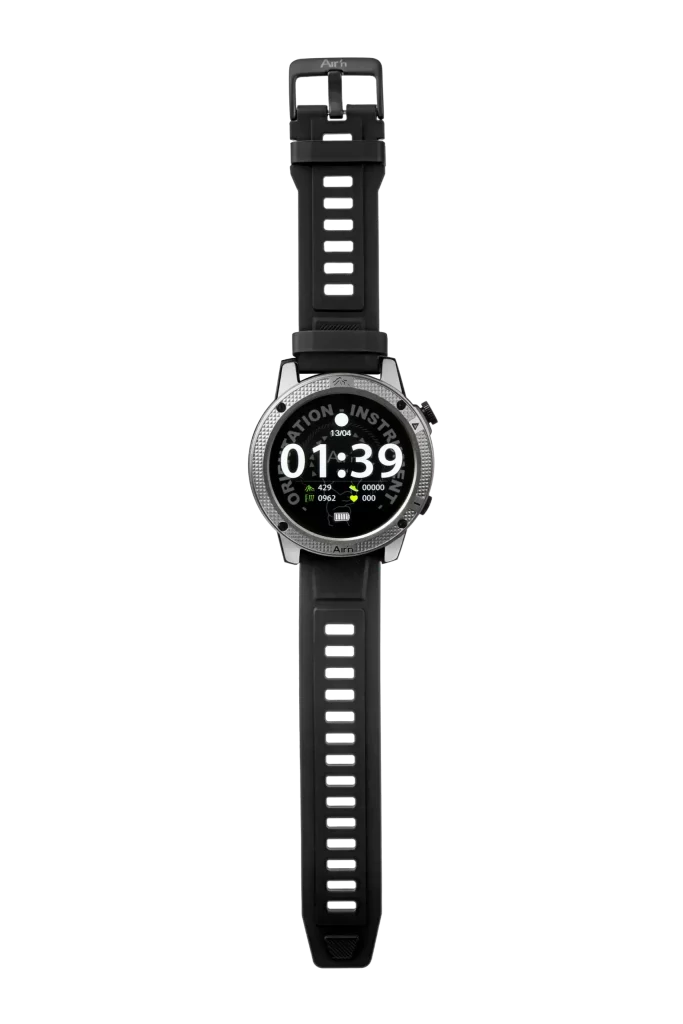
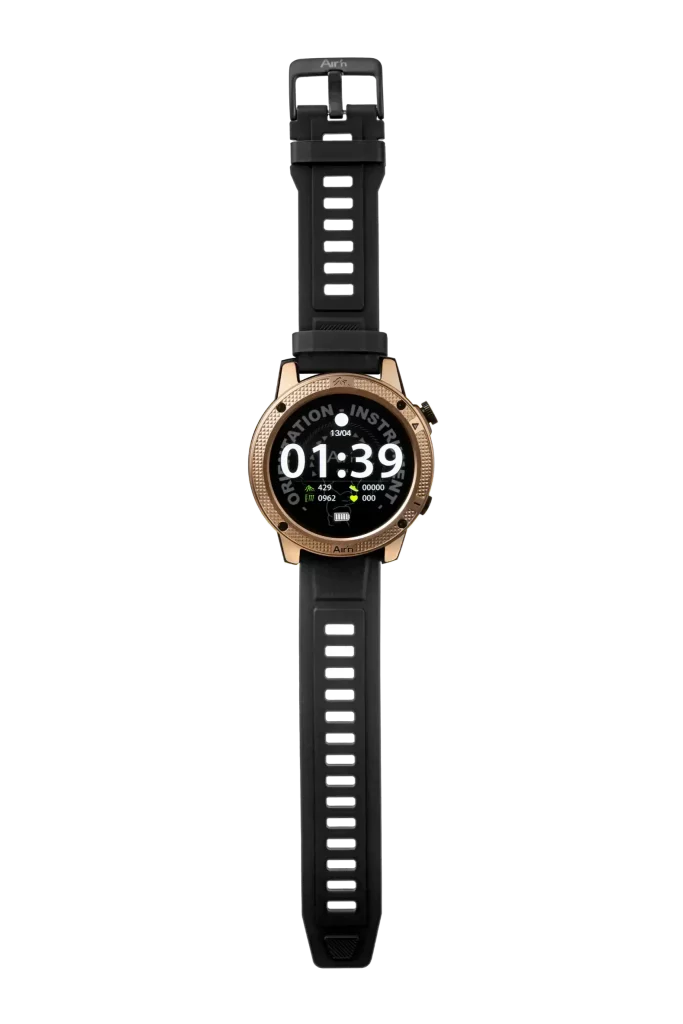
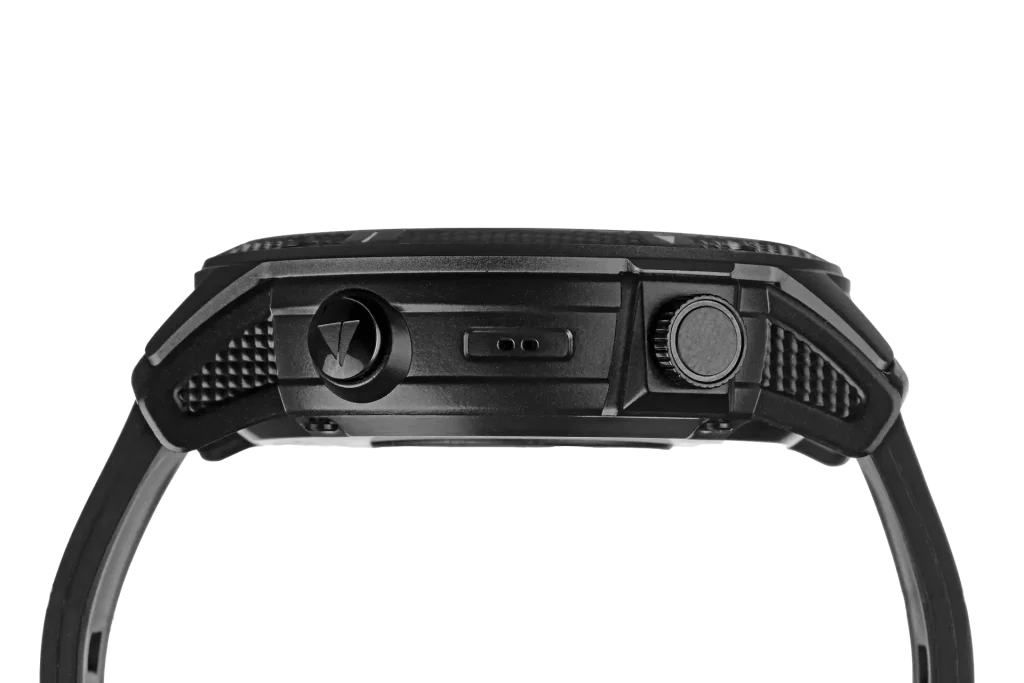
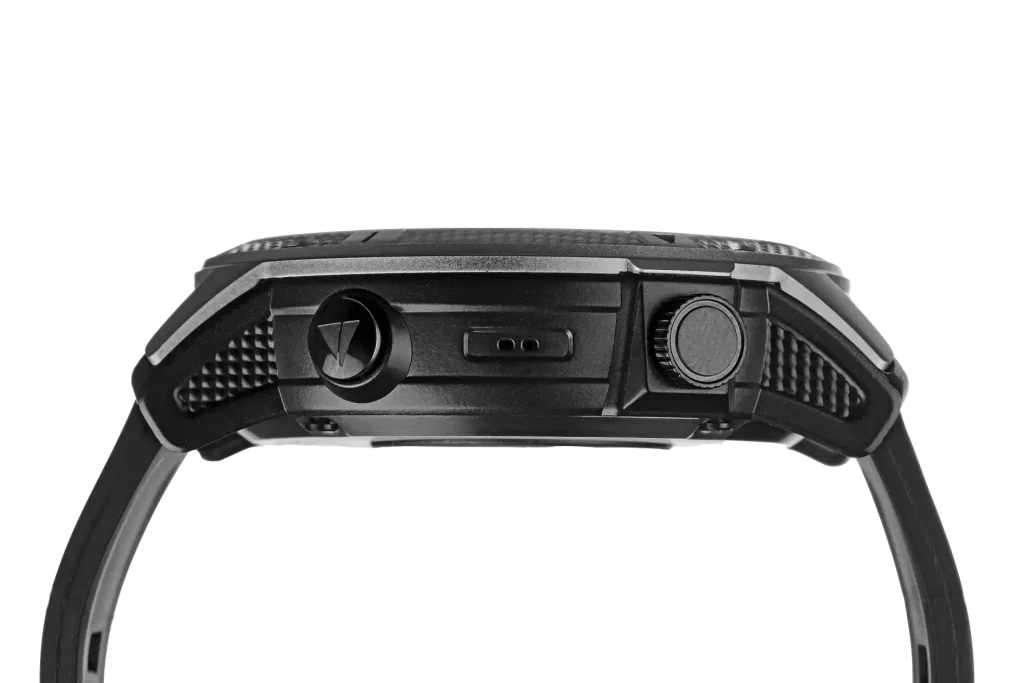
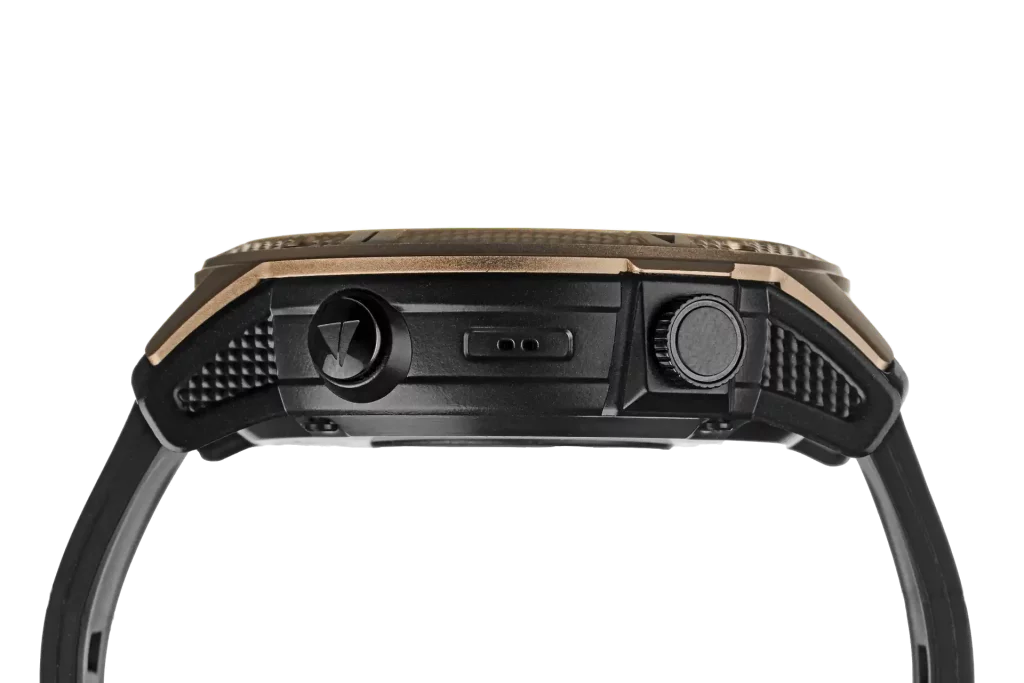
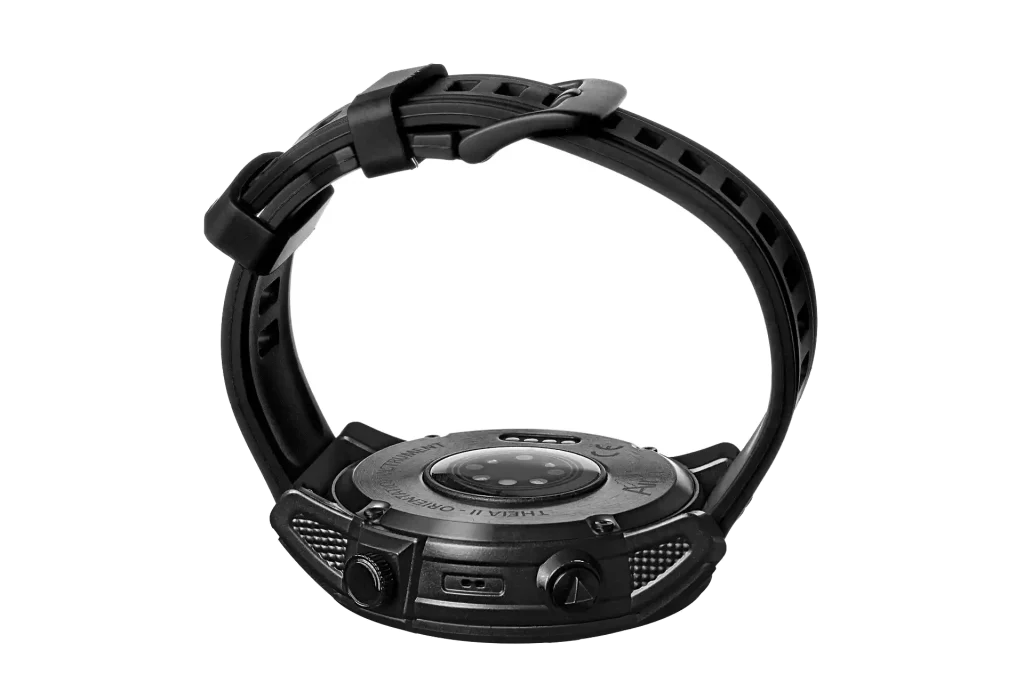
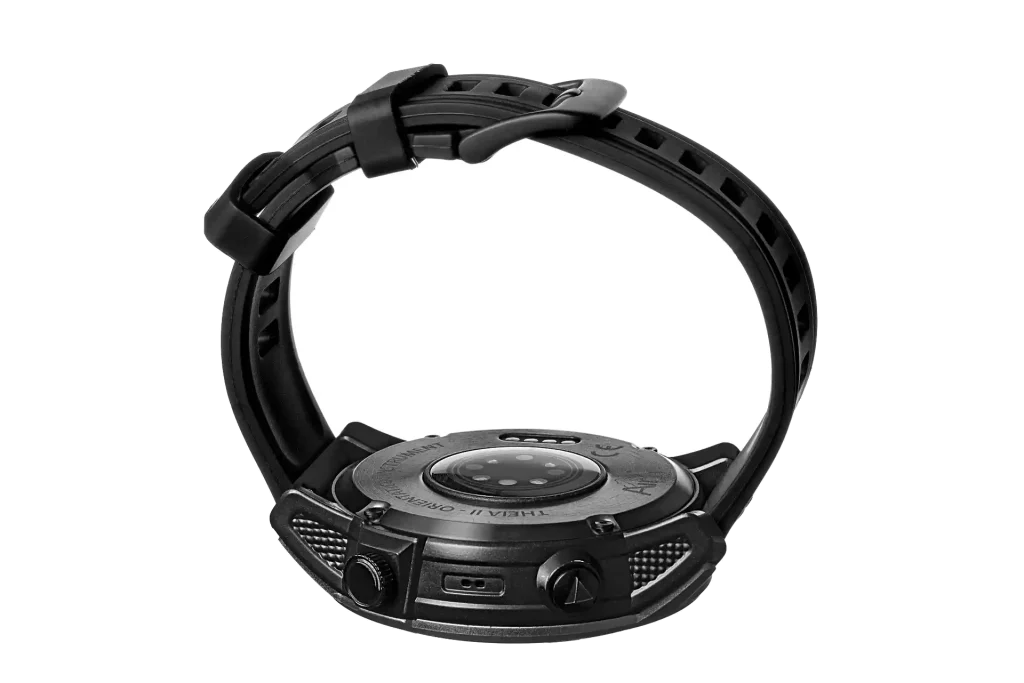
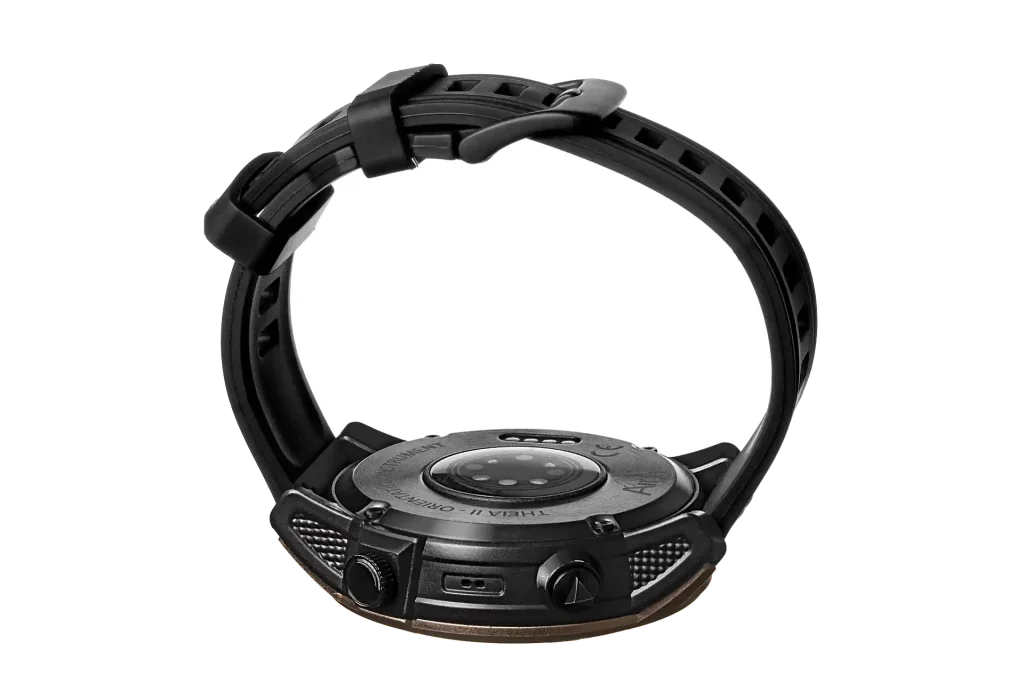
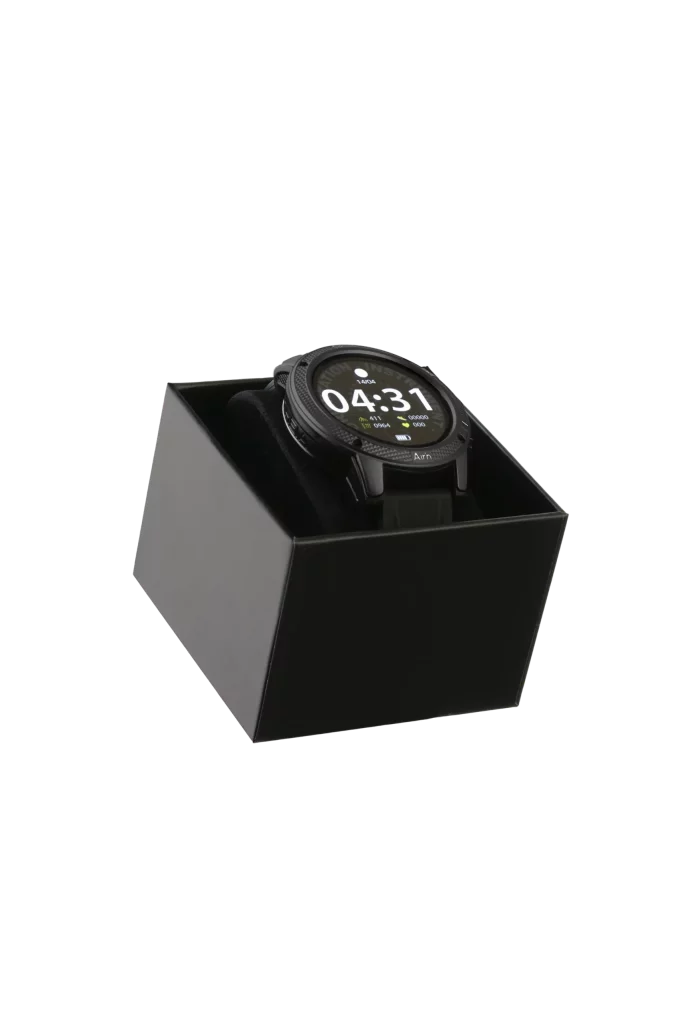
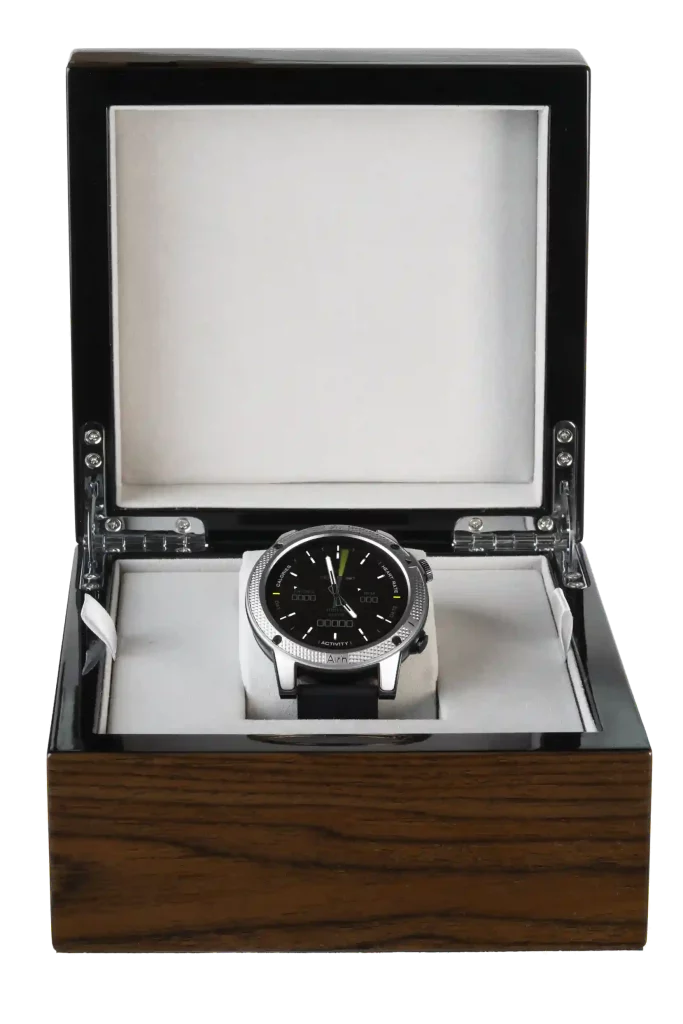
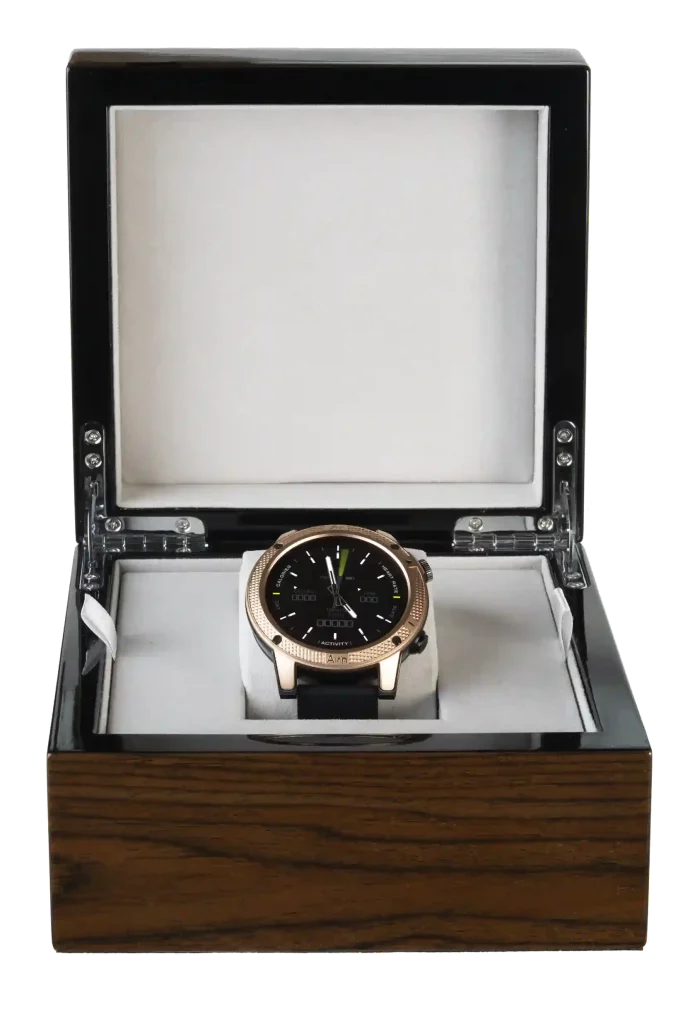
THEIA II navigation watch with offline maps
THEIA II Absolute Black
CHF 369 VAT included
Maps on your wrist when the phone signal drops. A way back with one press. Altitude, weather and heading at a glance, in a 58 g watch you also wear in town.
Finish
- 2-year warranty on the watch
- Dispatch in 24–48 h by Swiss Post, insured
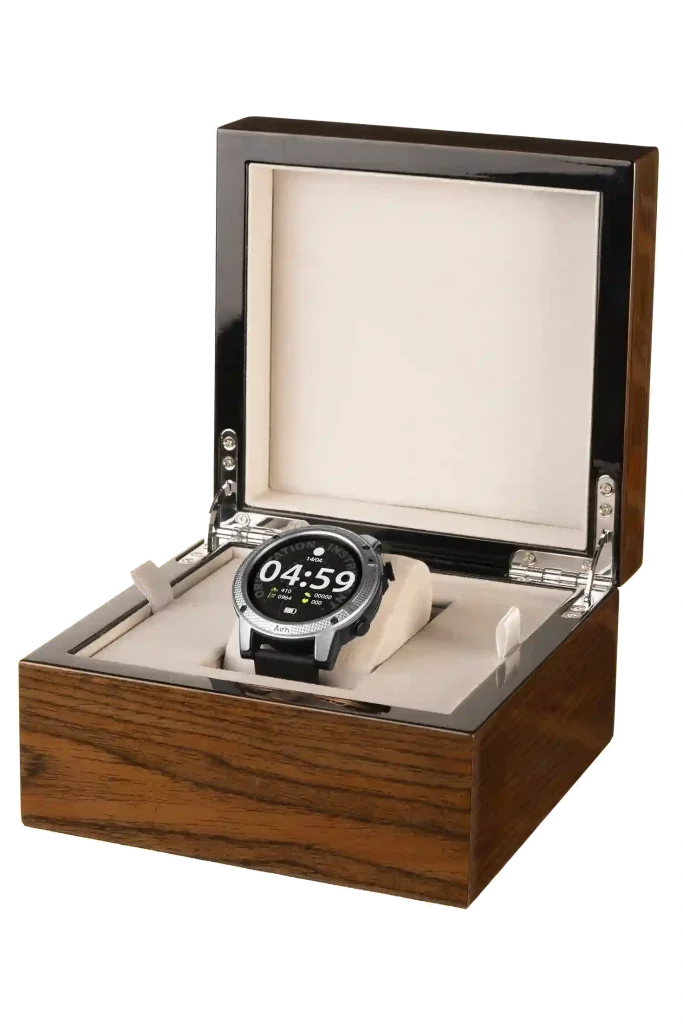
- W-Glass protection in the box
- Ships in a cardboard box
Watch face 3 faces on every watch, tap to preview
- Maps in 4 GB
- Multi-band GPS
- Return to start
- Altimeter, barometer, compass
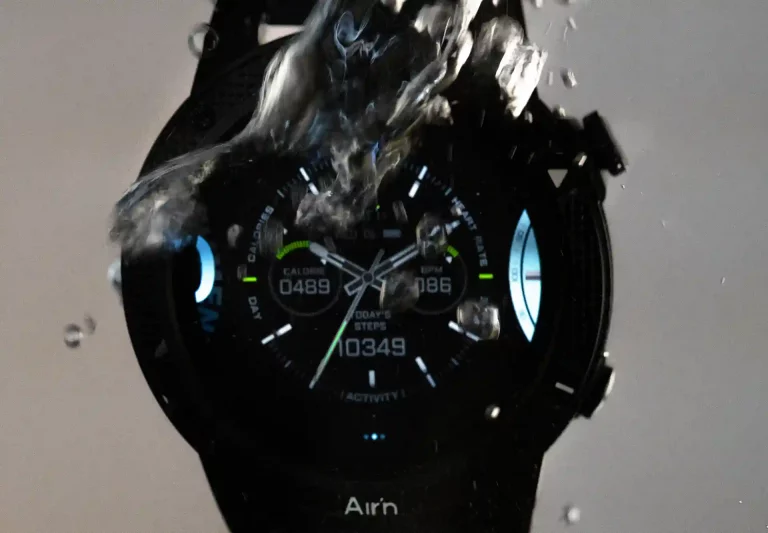
- 10 ATM
- 58 g
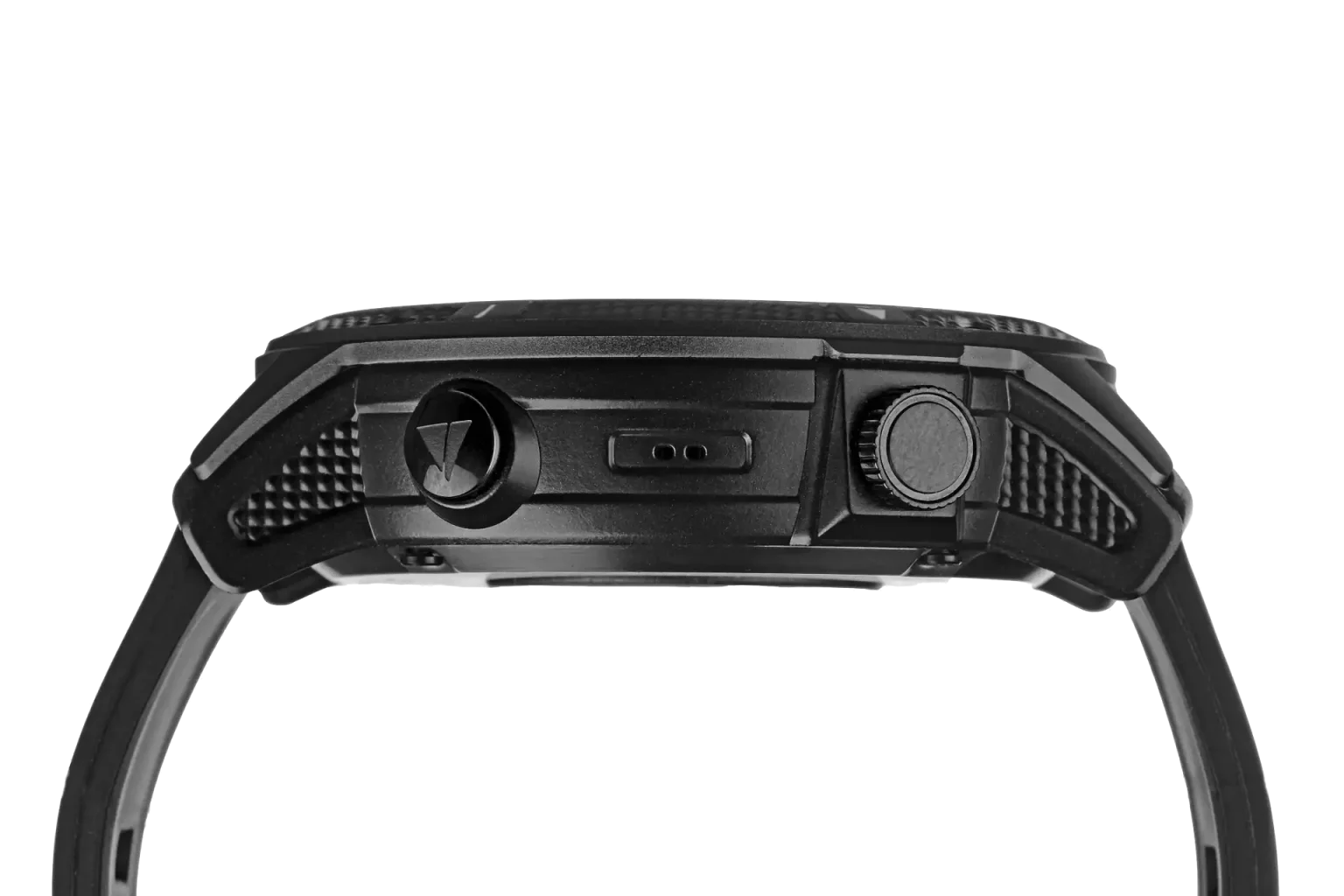
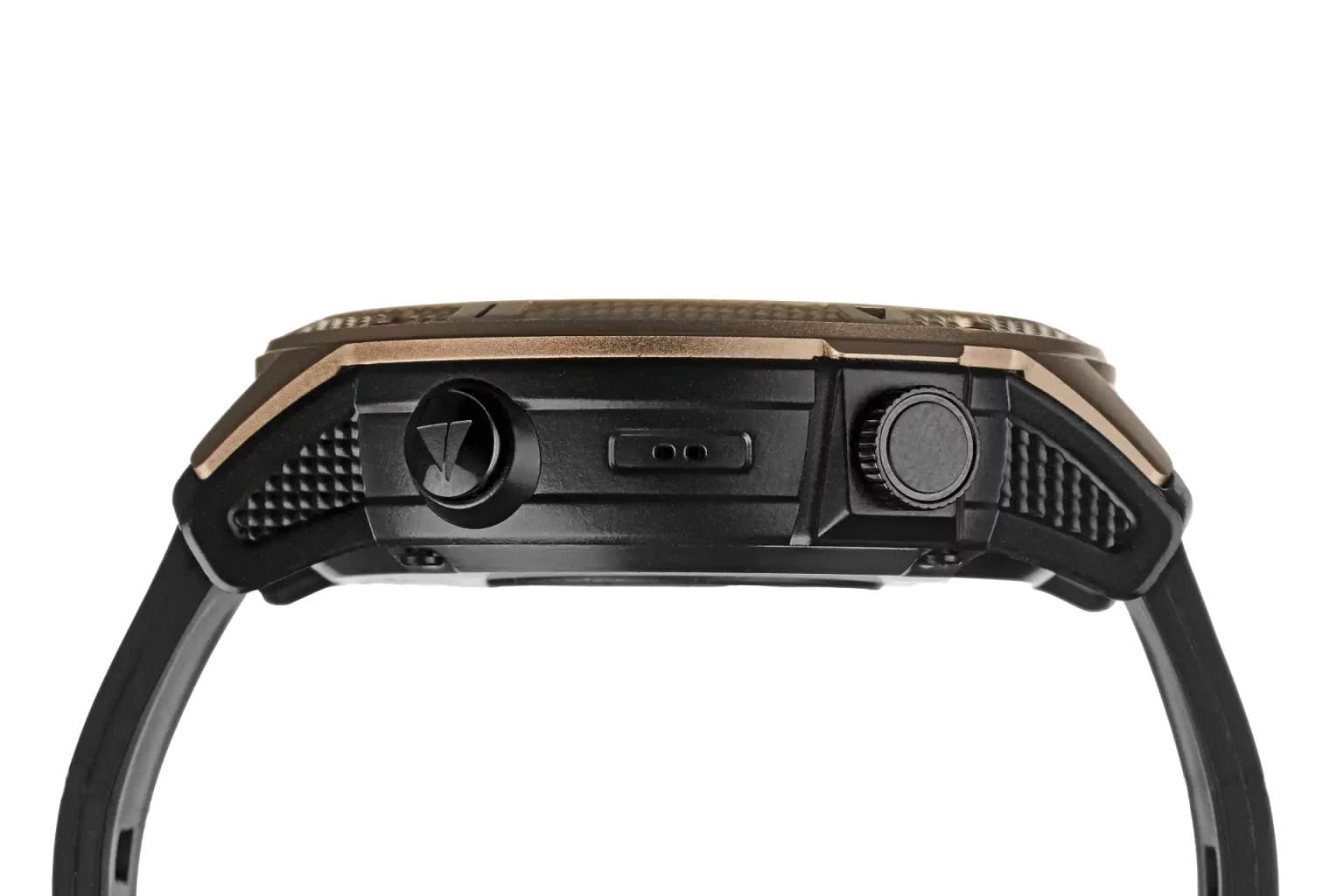
Barometric altimeter, barometer and compass
Altitude, weather, heading
The storm warning is in the watch menu, next to blood oxygen and the alarm.
- Altimeter calibrated at a known point
- Storm warning from the pressure drop per hour
- Compass calibrated for its surroundings
Field test Altitude and GPS data are tested on ski tours above Ovronnaz, Valais, up to about 2,700 m.
How it works
Set the barometric altimeter at a known altitude and the height is right for the rest of the day. Set a pressure-drop threshold and the barometer warns you when the pressure falls fast. The compass gives your heading on the watch, with no phone and no app. Since firmware EIONE 0.6.4, the watch shows elevation gain in real time with GPS on.
Return to start and safety features
When the fog comes in
Return to start works with no phone and no network. SOS goes through your paired phone.
- 4 seconds on the bottom button: return to start
- 10 seconds: SOS through your phone
- Screen lock during GPS tracking, against rain and spray
How it works
Hold the bottom button for 4 seconds and THEIA II guides you back along the track it recorded. It works on the watch alone.
The second of the two safety features is SOS. Hold the button for 10 seconds and the watch asks your paired phone to call your emergency contact. That call needs your phone and a network, and on iPhone, Apple’s rules may ask you to confirm it.
During GPS tracking the touchscreen locks so water cannot unlock it. Hold the bottom button for 3 seconds to unlock.
AMOLED screen, W-Glass and 10 ATM
Built to be read, and to take knocks
1,000 nits under Gorilla glass and a W-Glass layer you replace yourself.
- 1,000 nits, a bright screen
- W-Glass over Gorilla glass, replaceable
- 10 ATM, 58 g, 49.5 mm, 15 mm thick
Field test Impact-tested climbing in the Calanques of Marseille with the Compagnie des Guides de Chamonix, including the Pas Rébuffat on the Grande Candelle.
How it works
Scratch the W-Glass on rock and you fit a new one; one comes in the box. 10 ATM water resistance covers rain, snow and spray. The caseback is 304L steel. At 58 g, THEIA II is a lightweight watch for its size.
Some premium outdoor watches use a titanium bezel and sapphire crystal. THEIA II uses a coated bezel and glass you replace yourself.
Smart features for everyday life
Between trips
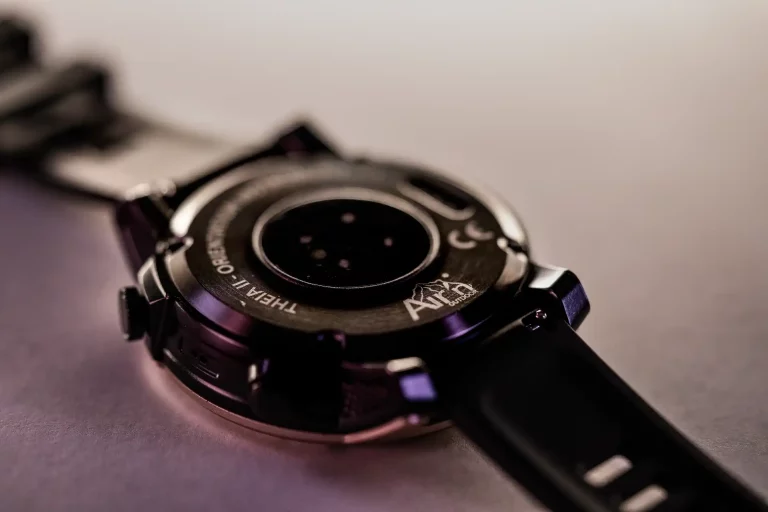
The sensors on the caseback measure heart rate and blood oxygen.
- Strava sync through the app
- Fitness tracking, sleep and heart rate
- Knots for sailing and water sports
Field test Air’n Outdoor compared the heart rate, blood oxygen and accelerometer data in a test with the University of Geneva and the EANS Foundation.
How it works
THEIA II shows message notifications from your phone and has find my phone, heart rate, pulse oximeter, steps, sleep tracking, alarm and stopwatch. Your activities sync to Strava through the app, for iOS and Android.
Preloaded modes: walking, mountaineering, ski touring, cycling, running, and a distance mode that shows speed in knots for sailing and water sports. For trail running with training load and performance tracking, a running watch such as the Garmin Forerunner suits you better.
On the strap
From the trail to the office
Silicone in the box. Leather waterproof straps at CHF 70.
- Silicone strap in the box
- Leather waterproof straps, CHF 70
- 3 finishes, 3 watch faces
Tested in the Alps and at sea
Since 2022, Air’n Outdoor has worked with the Compagnie des Guides de Chamonix Mont-Blanc and with ENSA, the national school of skiing and mountaineering, based in Chamonix since 1947. Their guides and instructors test THEIA II and work with our developers.
- Compagnie des Guides de Chamonix Mont-BlancPartner since 2022
- ENSA ChamonixPartner since 2022
- Au Vieux CampeurStockist



THEIA II in brief
THEIA II is an outdoor GPS watch by Air’n Outdoor, a watch brand based in Geneva, Switzerland. It is designed for outdoor enthusiasts: hiking, mountaineering, ski touring, cycling and water sports. It stores offline maps in 4 GB of memory, has dual-frequency GPS and return to start, and measures altitude, air pressure and heading. It weighs 58 g and is water resistant to 10 ATM. Battery life is 20 days in normal use and 15 hours in GPS mode. It costs CHF 369 or CHF 469, depending on the finish.
- Brand
- Air’n Outdoor, Geneva, Switzerland
- Made for
- Hiking, mountaineering, ski touring, cycling, sailing and water sports
- Navigation
- Maps in 4 GB, routes from the app, GPS tracking, return to start
- GPS
- Dual-frequency GPS, multi-band GNSS
- Sensors
- Altimeter, barometer with storm warning, compass, heart rate, pulse oximeter
- Screen
- 1.43-inch AMOLED, 1,000 nits, replaceable W-Glass
- Build
- 58 g, 49.5 mm, 10 ATM
- Battery
- 20 days in normal use, 15 h in GPS mode
- Price
- CHF 369 (Absolute Black), CHF 469 (White G, Rose G), VAT included
- Tested with
- Compagnie des Guides de Chamonix, ENSA
Tap a finish: the whole page follows.
Three finishes, three watch faces, 22 mm straps
Choose how it looks
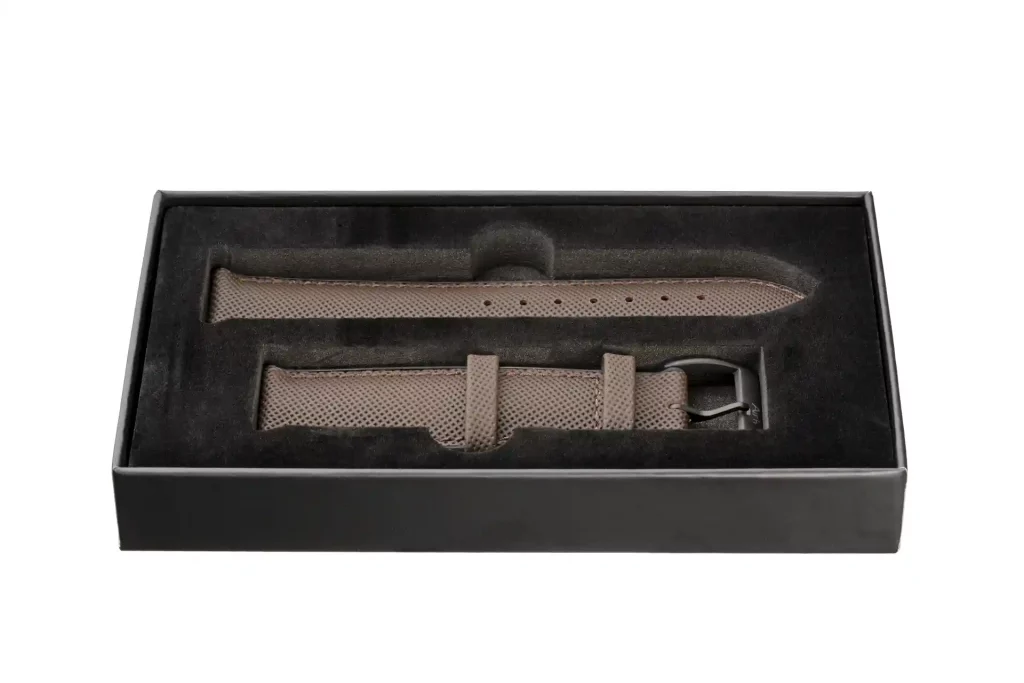
Leather waterproof straps, CHF 70
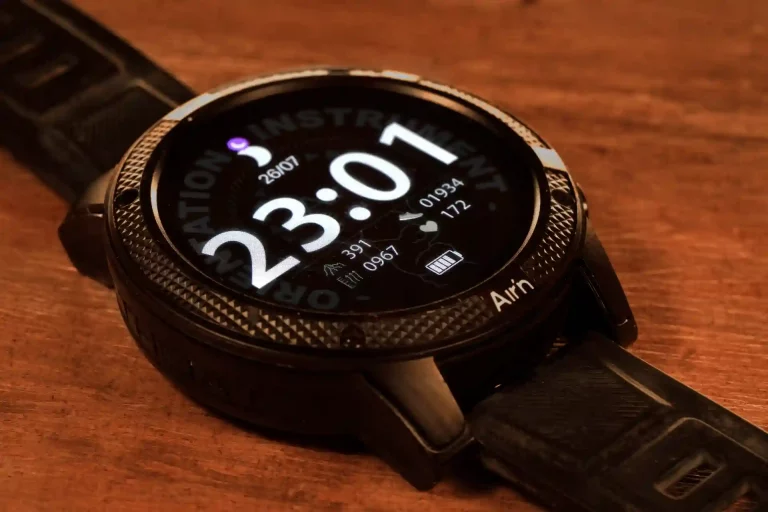
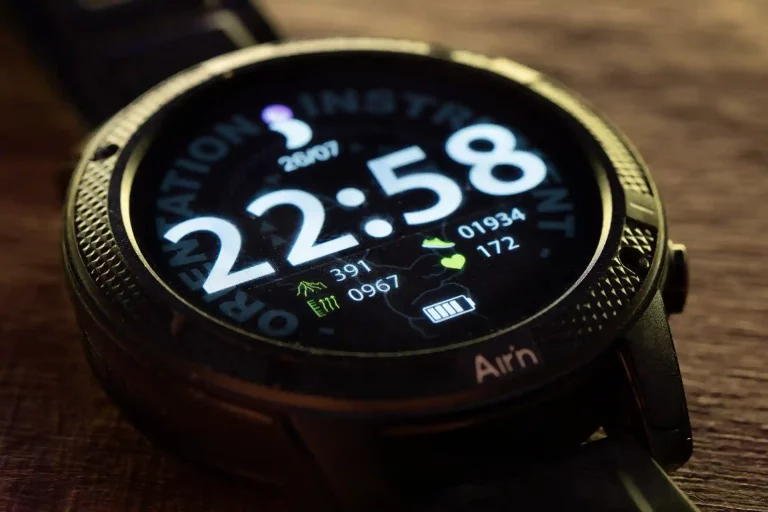
Waterproof leather glued and stitched onto a silicone base, made to match the clou de Paris pattern of the bezel. 22 mm, with interchangeable bars.
In the details
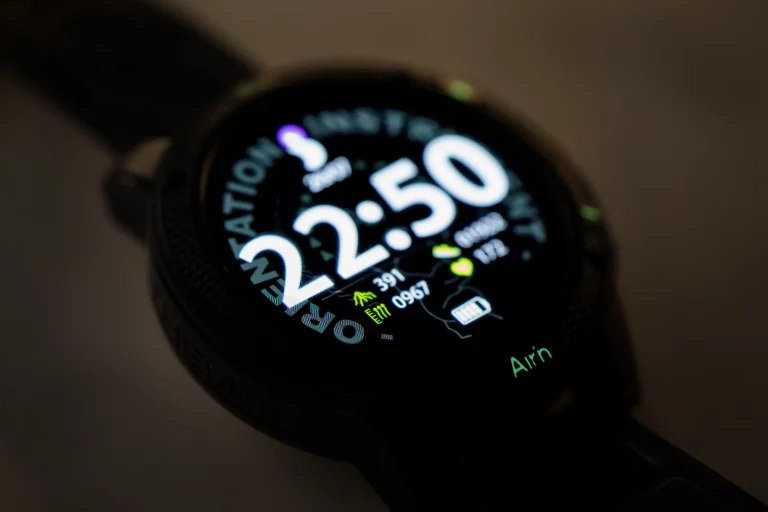
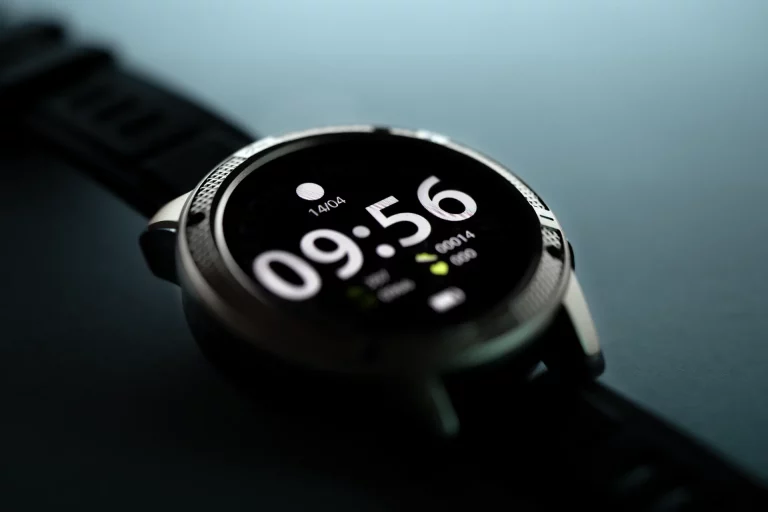
Made to be looked at
What’s in the box
Everything to start
- THEIA II Absolute Black
- Silicone strap, 22 mm
- 2 USB charging cables, type A and type C
- W-Glass protection, fitted by you
- User manual
- Ships in a cardboard box
THEIA II specifications
Everything in one table
| Display | 1.43-inch AMOLED touchscreen, 1,000 nits |
|---|---|
| Glass | Gorilla glass with W-Glass, replaceable by the user |
| Controls | Touchscreen and selectable rotating crown |
| Bezel | White-gold PVD (plated with white gold), absolute-black DLC with Luminova icons, or rose-gold 5N18 PVD (plated with 5N18 rose gold) |
| Caseback | 304L stainless steel, PVD coated |
| Size | 49.5 mm diameter, 15 mm thick |
| Weight | 58 g |
| Strap | 22 mm, quick change; silicone in the box, leather as an option |
| Water resistance | 10 ATM |
| Positioning | Multi-band GNSS, dual-frequency GPS |
| Sensors | Heart rate, pulse oximeter, 3D accelerometer, pressure (altimeter and barometer), compass |
| Maps | Stored in 4 GB of memory, loaded by USB; routes from the app on OpenStreetMap |
| Navigation | Routes, track recording, return to start, real-time elevation gain with GPS on |
| Battery | 20 days in normal use, 15 h in GPS mode; lithium-ion, charged by USB-A or USB-C |
| Processor | 32-bit dual-core, 160 MHz |
| App | AIRN CONNECT for iOS and Android, Bluetooth; Strava compatible |
| Software | EIONE operating system, updated through the app |
| Everyday | Notifications, find my phone, steps, sleep tracking, alarm, stopwatch |
Warranty, delivery and support
Covered after you buy
- 2 yearsWarrantyOn the watch from activation. Accessories 2 years, straps 180 days.
- 24–48 hDispatchSent by Swiss Post, with transport insurance.
- W-GlassReplaceable glassScratched glass is a part you change yourself.
- iOS + AndroidAppPlan routes, load maps, sync to Strava.
Does THEIA II work without a phone signal?
Yes. In GPS mode, the maps, GPS tracking, return to start, the altimeter and the compass all work on the watch alone. Only SOS needs your phone and a network, because the phone places the call.
How long does the battery last?
THEIA II is rated 20 days of battery life in normal use and 15 hours in GPS mode. It charges by USB-A or USB-C cable, and both cables come in the box. For long battery life over several days without charging, an expedition watch with solar charging suits you better.
How does THEIA II compare with the best GPS watches?
On battery life, the expedition GPS watches last far longer: the Garmin Enduro 3, the COROS VERTIX 2S and the Suunto Vertical 2, and the Garmin Fenix 8 and Garmin Instinct 3 too. THEIA II gives you maps, dual-frequency GPS, return to start, a barometric altimeter and a compass in 58 g, with glass you replace yourself, from CHF 369. For day trips and everyday wear, that is where it is the best value.
Where has THEIA II been tested?
With the Compagnie des Guides de Chamonix under the Mer de Glace near Chamonix and while climbing in the Calanques of Marseille; on ski tours above Ovronnaz in Valais; at sea off the Levant Islands; and windfoiling on Lake Geneva. ENSA instructors and guides work with the developers. A comparison test of the heart rate, blood oxygen and accelerometer data was run with the University of Geneva.
What maps does it use?
Maps stored in 4 GB of memory, loaded from your computer by USB. You plan routes in the app on OpenStreetMap and send them to the watch.
Does THEIA II work with an iPhone?
Yes. The AIRN CONNECT app runs on iOS and Android and connects by Bluetooth. THEIA II does not run Apple Watch apps. For SOS, an iPhone may ask you to confirm the call.
How accurate is the GPS?
THEIA II has dual-frequency GPS. Multi-band reception gives cleaner GPS tracking and a more precise GPS location in valleys, forest and below cliffs, where single-band signals bounce. It works best with a clear view of the sky.
Can I replace the glass myself?
Yes. THEIA II has W-Glass, a layer you replace yourself, over Gorilla glass. A W-Glass protection comes in the box.
What is the difference between the three finishes?
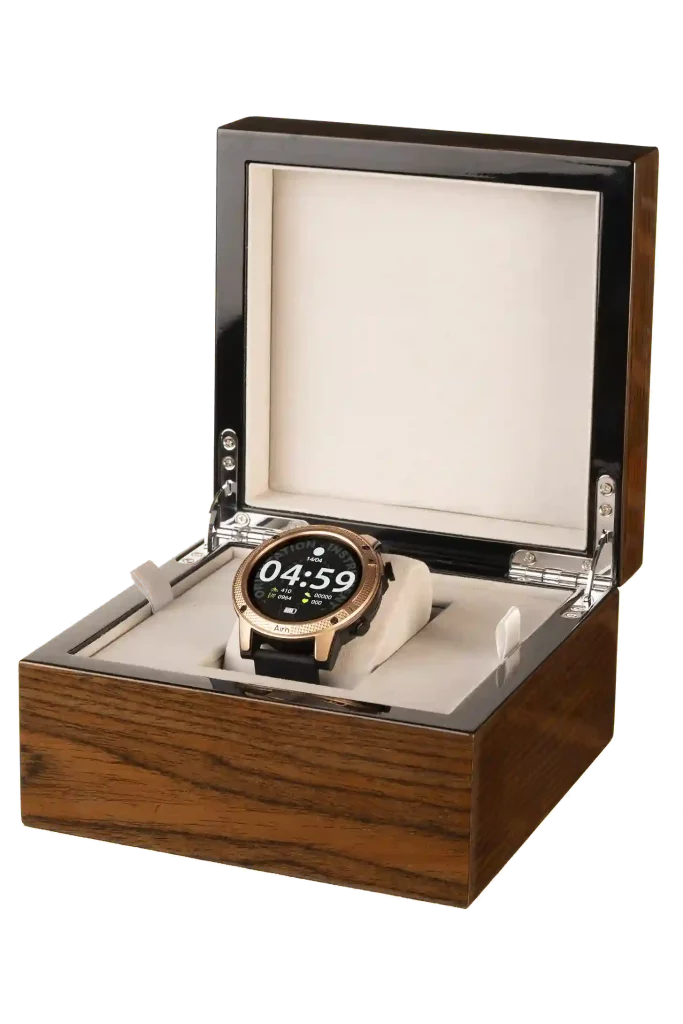
The bezel and the box. Absolute Black has a black DLC bezel with Luminova icons and costs CHF 369, in a cardboard box. White G and Rose G have white-gold and rose-gold PVD bezels, plated with white gold and rose gold, and cost CHF 469, in a wooden box. The functions are the same.
Does it work with third-party apps?
THEIA II syncs your activities to Strava through its own app, for iOS and Android.
Is THEIA II a watch for trail running?
It has a running mode and fitness tracking, and it is built for the mountains and the water, where navigation matters more than pace. Trail runners who want training tools and a training plan will be better served by a running watch such as the Garmin Forerunner.
Battery life compared with the best GPS watches
Where THEIA II fits
That battery life covers a long day in the mountains with GPS tracking on. In daily life, it means a charge every few weeks. For multi-day trips far from power, other watches with solar charging or a bigger battery last longer. For the best battery life, look at the Garmin Enduro 3.
There are many GPS watches. Battery life, maps and price are where GPS watches differ most. These are each maker’s own figures for THEIA II and six other outdoor watches.
| Watch | Daily use | GPS mode | Multi-band GPS | Also worth knowing |
|---|---|---|---|---|
| THEIA II | 20 days | 15 h | Dual-band | Maps in 4 GB; return to start; replaceable glass; 58 g |
| Garmin Instinct 3 AMOLED, 50 mm | Up to 24 days | Up to 40 h | Up to 30 h | |
| Garmin Fenix 8 AMOLED, 47 mm | Up to 16 days | Up to 47 h | Up to 35 h | Up to 37 h in GPS mode with the display always on |
| Garmin Enduro 3 | – | Up to 320 h with solar charging | Up to 120 h | Sapphire crystal, integrated flashlight, TopoActive maps preloaded |
| COROS VERTIX 2S | – | 118 h | – | Sapphire crystal screen |
| Suunto Vertical 2 | – | Up to 250 h in Tour mode | Up to 65 h | Integrated flashlight, free maps from Suunto |
| Apple Watch Ultra 4 | Up to 50 h | Up to 18 h of workout tracking | – | Up to 84 h in Low Power Mode |
Battery life on GPS watches: how to read the figures
Compare the same mode on all GPS watches.
Makers quote battery life per mode, so compare GPS mode with GPS mode across all the watches you look at. Multi-band GPS uses more battery power than standard GPS tracking, so it gives shorter battery life. An always-on display uses more again: Garmin rates the Garmin Fenix 8 AMOLED 47 mm at up to 47 h in GPS mode and up to 37 h with the display always on.
Battery saving modes give improved battery life by lowering GPS accuracy, and solar charging adds hours in bright light. All figures are the makers’ own best cases. When testing GPS watches yourself, expect fewer hours in the cold and with the screen at full brightness, THEIA II included.
Best battery life: Garmin Enduro 3, with a built-in flashlight
For trips of several weeks.
Of the GPS watches compared here, the Garmin Enduro 3 has the best battery life. Garmin rates it at up to 320 h with GPS and solar charging, measured in 50,000 lux, and up to 120 h in multi-band mode. It has sapphire crystal, a built-in flashlight and TopoActive topo maps preloaded.
For trips of several weeks away from power, the Garmin Enduro 3 is the better choice; THEIA II is rated 15 h with GPS.
Suunto Vertical 2 and COROS VERTIX 2S
Two more expedition GPS watches.
Suunto rates the Suunto Vertical 2 at up to 250 h in Tour mode, with lower GPS accuracy, and up to 65 h in multi-band mode. It has an integrated flashlight, and Suunto offers free maps for it.
COROS rates the COROS VERTIX 2S at 118 h with GPS. It has a sapphire crystal screen. The Suunto Vertical 2 and the COROS VERTIX 2S both give long battery life on routes where you cannot charge.
Garmin Fenix 8 and Garmin Instinct 3
Garmin’s outdoor range.
Garmin rates the Garmin Fenix 8 AMOLED 47 mm at up to 16 days in smartwatch mode, up to 47 h with GPS and up to 35 h in multi-band mode.
Garmin rates the Garmin Instinct 3 AMOLED 50 mm at up to 24 days in smartwatch mode, up to 40 h with GPS and up to 30 h in multi-band mode. Garmin makes outdoor watches and sports watches for most sports.
Apple Watch Ultra 4
For iPhone users.
Apple rates the Apple Watch Ultra 4 at up to 50 h in normal use, up to 84 h in Low Power Mode and up to 18 h of workout tracking. It takes phone calls, runs third party apps and has music storage.
It suits iPhone and Apple Watch users who want one device for phone calls and the outdoors, on day trips. Workout tracking gives the Apple Watch Ultra 4 shorter battery life than the expedition GPS watches; for long battery life over several days, the expedition GPS watches above last longer.
Trail running: Garmin Forerunner and other running watches
If pace and a training plan come first.
For trail runners who follow a training plan, running watches such as the Garmin Forerunner, and other sports watches built for trail running, offer training tools such as training load and recovery.
THEIA II has a running mode and fitness tracking, and syncs to Strava. If your training history is in the Polar Flow app or Garmin Connect, check how you would move it before you switch.
Maps and GPS accuracy on GPS watches
Topo maps, GNSS, two bands.
GPS watches use GNSS, the satellite systems that include GPS. Dual-frequency GPS listens on two bands and gives a cleaner track in valleys and forest. THEIA II, the Garmin Fenix 8, the Garmin Instinct 3, the Garmin Enduro 3 and the Suunto Vertical 2 all offer dual-frequency or multi-band GPS.
Maps differ more. The Garmin Enduro 3 ships with TopoActive topo maps preloaded, and Suunto offers free maps; THEIA II stores the maps you load from your computer, in 4 GB. If you need detailed topo maps with contour lines, check what each maker offers for your region.
Best value: where THEIA II fits among the best GPS watches
Day trips and everyday wear.
THEIA II costs CHF 369 or CHF 469. It has maps in 4 GB, dual-frequency GPS, return to start, a barometric altimeter and a compass in 58 g, with glass you replace yourself.
It suits day hikes, ski tours, mountaineering days, sailing and everyday wear. It does not suit multi-day trips without charging. It has no solar charging and no flashlight; if you need either, choose one of the other watches above. If you only walk marked trails, an affordable watch without maps may be enough.
Figures are each maker’s own, checked 12 and 14 October 2026: Garmin Instinct 3 manual · Garmin Fenix 8 manual · Garmin Enduro 3 · COROS VERTIX 2S · Suunto Vertical 2 · Apple Watch battery. Read the full buying guide
How to choose a GPS watch
Eleven questions before you buy
The best GPS watches for a day hike are not the best GPS watches for a three-week expedition. For outdoor enthusiasts, these eleven questions narrow the choice between GPS watches, whichever of the outdoor watches you buy.
How much battery life do you need?
Count the hours you spend with GPS on.
Battery life is the figure that varies most between the best GPS watches. Most GPS watches quote three figures: smartwatch use, standard GPS and multi-band tracking. On GPS watches, multi-band GPS gives shorter battery life; battery saving modes give longer battery life with less precise GPS.
For a day out, count the hours you walk with GPS tracking on: THEIA II is rated 15 h with GPS on, and Garmin rates the Garmin Fenix 8 AMOLED 47 mm at up to 47 h. For long battery life over several days without a charger, look at GPS watches with solar charging: Garmin rates the Garmin Enduro 3 at up to 320 h with GPS and solar charging, and COROS rates the COROS VERTIX 2S at 118 h. For long-lasting battery life over several weeks, solar charging is the feature to look for.
How accurate does the GPS need to be?
Valleys, forest and cliffs.
GPS watches calculate your position from the signals of several GNSS satellites. How accurate the track is depends on the receiver and on how much open sky GPS watches can see. Dual-frequency GPS listens on two signal bands and gives more accurate tracking where signals bounce, at the cost of some battery life. Among the best GPS watches compared here, THEIA II, the Garmin Fenix 8, the Garmin Instinct 3, the Garmin Enduro 3 and the Suunto Vertical 2 all offer it. On open ground, single-band GPS watches use less battery life.
Do you need maps on the watch?
Offline maps and topo maps.
If you leave marked trails, maps matter more than any other feature of GPS watches. Check whether the maps work offline, whether they show contour lines, and how you load them. Maps and a bright screen also cost battery life on long days. Among the best GPS watches for maps, the Garmin Enduro 3 ships with TopoActive topo maps. Polar preloads maps of Europe and North America on the Polar Grit X2 Pro and lets you add more through Polar Flow. Suunto watches such as the Suunto Vertical 2 take free maps for offline use, with 32 GB of map storage. THEIA II stores up to 4 GB of maps you load from your computer, and you plan routes on OpenStreetMap in its mapping app.
Which sensors do you need?
Altimeter, barometer, compass, heart rate.
For the mountains, look for ABC sensors: altimeter, barometer and compass. A barometer that follows the pressure drop gives a storm warning. A digital compass shows your heading even when you stand still, which GPS watches without a compass cannot. Sensors that measure all day, such as heart rate and blood oxygen, also cost battery life. Heart rate and a pulse oximeter matter for training, fitness tracking and sleep tracking. Check whether the GPS watches you compare have a barometric altimeter or only a GPS altitude. THEIA II has all of these.
How tough does it need to be?
Glass, bezel, water resistance.
On GPS watches for the mountains, look for water resistance, a screen you can read in sun, and glass and a bezel that take knocks. The best GPS watches for expeditions often use sapphire crystal and a steel or titanium bezel: the Suunto Vertical 2 and the Polar Grit X2 Pro have a stainless steel bezel and sapphire glass, the COROS VERTIX 2S has a sapphire crystal screen, and Garmin sells the Garmin Fenix 8 in sapphire editions. Amazfit says the Amazfit T-Rex 2 passed 15 military-standard MIL-STD-810G tests. THEIA II uses W-Glass over Gorilla glass, which you replace yourself when it scratches. It is rated 10 ATM, so it goes in the rain and spray with the rest of your outdoor gear.
Which smart features matter to you?
Phone calls, music, apps.
Some GPS watches take phone calls, store music and run third party apps; among the best GPS watches, the Apple Watch Ultra 4 does all three, and Apple rates it at up to 18 hours of outdoor workout tracking. THEIA II shows message notifications, syncs to Strava and gives you even the ability to find your phone from the wrist. If phone calls and music storage on the wrist matter to you, check each of the GPS watches before you buy: phone calls, music and an always-on screen all cost battery life.
Do you train for trail running?
Training tools and recovery.
Trail runners who follow a plan need training tools and advanced features: training load, recovery and performance tracking. If you compare the best GPS watches for trail running races, look at running watches such as the Garmin Forerunner, and at other sports watches built for trail running. Garmin sells the Garmin Forerunner series for running. THEIA II has a running mode; for training plans, a Garmin Forerunner is the better tool. For fitness tracking in everyday life, heart rate, steps and sleep tracking are enough, and THEIA II has them.
What is the best value for your use?
Price against what you will use.
The best value is the watch whose features you will use; the best GPS watches on paper are not always the best value for your trips, and for running alone a Garmin Forerunner may be the better value. Compared with other watches here, expedition GPS watches add multi-day battery life and sapphire crystal you may not need on day trips, and an affordable watch without maps can be enough on marked trails. THEIA II costs CHF 369 or CHF 469, with maps, dual-frequency GPS, return to start and ABC sensors in 58 g. Its PVD and DLC finishes give it the look of a premium watch.
How do the best GPS watches compare on battery life?
Hours with GPS on, from each maker.
Reviews of the best GPS watches use words like excellent battery life, impressive battery life, incredible battery life or exceptional battery life. Those words tell you less than the hours: excellent battery life for a day hike is not excellent battery life for a ten-day trek, and exceptional battery life in smartwatch use can still mean a short day with GPS on. Compare the same setting on all GPS watches you look at. Battery life with GPS on, from each maker:
- THEIA II: 15 h with GPS on; 20 days of battery life in normal use.
- Garmin Enduro 3: battery life up to 120 h with GPS, up to 320 h with solar charging.
- COROS VERTIX 2S: battery life of 118 h with GPS.
- Garmin Fenix 8 Solar: up to 67 h with GPS only on the 47 mm (92 h with solar), up to 95 h on the 51 mm (149 h with solar).
- Suunto Vertical 2: battery life up to 65 h in Performance mode with multi-band tracking; up to 250 h in Tour mode, with lower accuracy and heart rate off.
- COROS APEX 4, 46 mm: 53 h with all GNSS systems on; 65 h in its Endurance mode.
- Garmin Instinct 2 Solar: battery life up to 30 h with GPS, 48 h with solar.
- Apple Watch Ultra 4: up to 18 h of outdoor workout tracking, 45 h in Max Extended Workout.
Solar figures assume 50,000 lux of light the whole time. Multi-day battery life comes from solar charging or a bigger battery, and of these GPS watches the Garmin Enduro 3 gives the best battery life. If your trips last a day, GPS watches with a shorter battery life will do: check the hours against your longest day. Battery life figures: Garmin, COROS, Suunto and Apple product pages and manuals, Garmin Fenix 8 Solar from retailer listings, COROS APEX 4 from Tom’s Guide; checked 14 October 2026.
Which GPS watches suit the sea and wet weather?
Water rating, buttons, knots.
On a boat, GPS watches show your position and speed and record your track; some GPS watches also record waypoints. Physical buttons on GPS watches make navigation easier in rain and spray or with gloves on, because water on a touchscreen can register as a touch. THEIA II locks its touchscreen during GPS tracking, you unlock it with the bottom button, and it shows speed in knots for sailing. Cold also shortens battery life, as with any lithium-ion battery, so keep the watch under your sleeve on winter tours. When you compare the best GPS watches for sailing, check the water rating: THEIA II is rated 10 ATM, and Polar and Suunto rate the Polar Grit X2 Pro and the Suunto Vertical 2 water resistant to 100 m.
Do GPS watches work without a phone?
What works with no signal.
Even the best GPS watches need a phone for some things. GPS tracking, maps you loaded before you left, the compass and the altimeter work on GPS watches without a phone. On THEIA II, maps, GPS tracking, return to start, the altimeter and the compass all work on the watch alone; only SOS needs your phone and a network. Notifications and syncing tracks to Strava go through the phone app. Before you take GPS watches into remote terrain, check which functions still work with no signal, and how much battery life they leave you.
Choose your THEIA II
Three finishes, one watch
The same functions in every finish. The bezel, the box and the price differ.